Saturday, July 31, 2010

Bonsai tree: The Dog Days

bonsaiwithguy

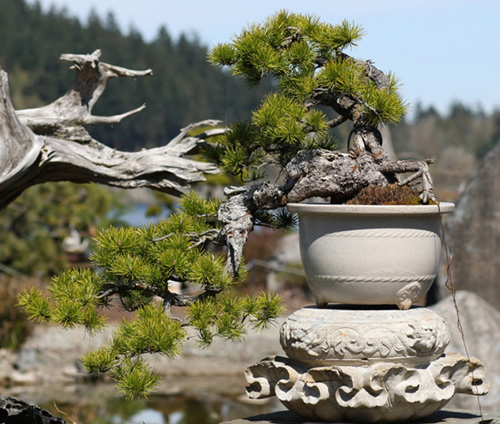
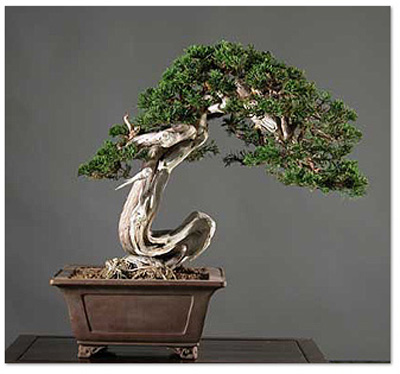
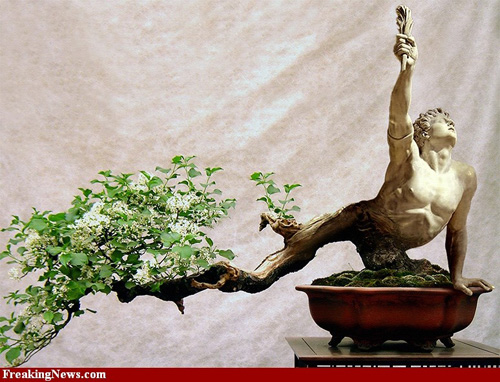
Bonsai? Weird perversion? Highly innovative new cross art? Whaddya think? And to answer your question, I don’t know for sure, but I’d bet my third born grandchild that it’s a Lenz (it just has too many marks of the old Master to deny). Anyway, you can blame it on BUNJINJOURNAL.COM. Or further down the chain of blame; FreakingNews.com.

Source: Bonsai Bark Read more!

Friday, July 30, 2010

Bonsai tree: How to decandle shohin black pine

Source: Bonsai Tonight
How to decandle shohin black pine
Decandling shohin black pine is similar to decandling larger black pine bonsai with one key difference – it’s done later in the season. Just by a few weeks. By giving summer shoots less time to develop, we prevent them from growing too large. As is often the case in bonsai, proportion is far more important that absolute size. “Small needles” are great in the abstract, but on a tree they can look funny if the proportion is off. Larger trees look good with larger needles, shohin look good with small needles. All of which can be produced by careful decandling.
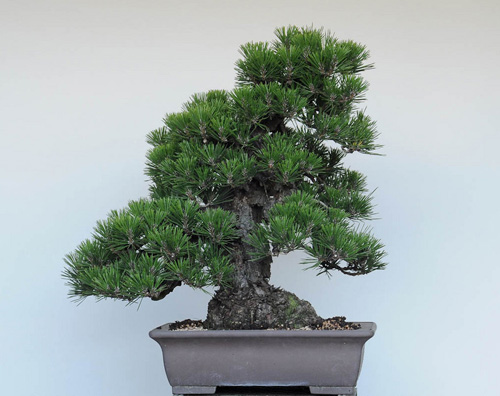
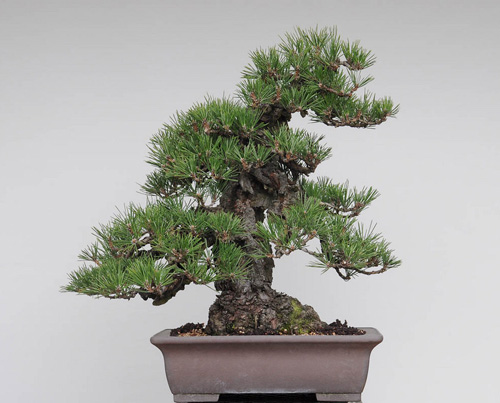
Here’s a 16 year-old shohin black pine, ready for its second or third decandling. It’s rather shaggy.
Shohin Japanese black pine
Shohin Japanese black pine – before decandling
Read more!

Thursday, July 29, 2010

Bonsai tree: Unusual Rocky Mountain Juniper Styling

This tree has been sitting on my benches for about three years. It has some interesting twists, and some very challenging angles in old wood that made it a compromising puzzle to find the best front and inclination.
The first year it was planted any which way—which happened to be upright—in a box of pumice to get the roots growing again. It had just been collected. The next year I put it in a box as a cascade to let it grow strength and to look at it that way. Well, eventually I disagreed with myself and potted it up this spring as an upright again. I imagine the tree is getting dizzy.
This is a photo essay of the styling of it—
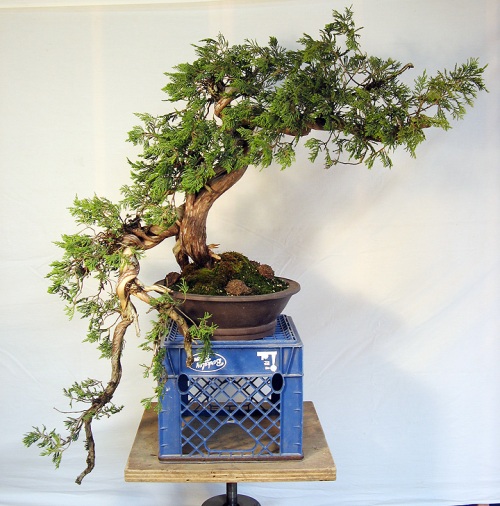
The Rocky Mountain juniper before styling.

One of the best features of the tree, a very old cascading, twisting branch.

The large right upper branch was stripped and carved.
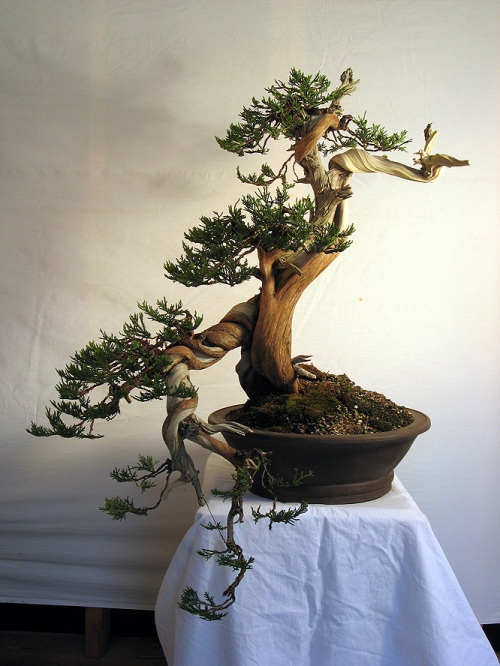
Final photo. Tree is 32" from apex to bottom of the cascade. The lower branch in particular needs growth to fill out and balance the lower cascade. Also the training pot is too big to be a final pot. So there is still development to be done with this one, as ever. Whenever was a bonsai done in a day?
I enjoyed working on this tree. The rigidity of the basic structure—the old branches—did not allow the usual harmonies to be imposed on them. And so I left the tree pretty much as it was. I think in the future a very interesting tumbling pattern of foliage pads could develop, almost like water coming down a waterfall over an erratic pattern of rocks. Read more!
Bonsai tree: Coming Soon: North American Bonsai at the International Bonsai Symposium

maple
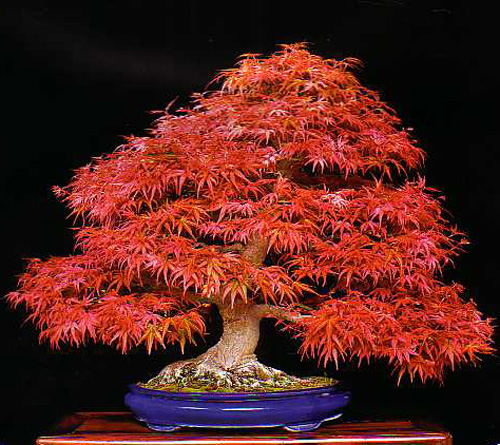
This splendid Japanese maple by Bill Valavanis is from the cover of International Bonsai’s special Maple Issue.
Larch, cedar, bald cypress, buttonwood, Rocky mountain juniper will be all featured September 10-12 in Rochester NY. Meet some excellent bonsai artists and teachers, take a couple workshops and go home happy (visit International Bonsai for details).
…the gallery book North American Bonsai is now double discounted at Stone Lantern. So is The 1st U.S. National Bonsai Exhibition Album.

Source: Bonsai Bark Read more!

Wednesday, July 28, 2010

Bonsai tree: More Than Just Pots

sara
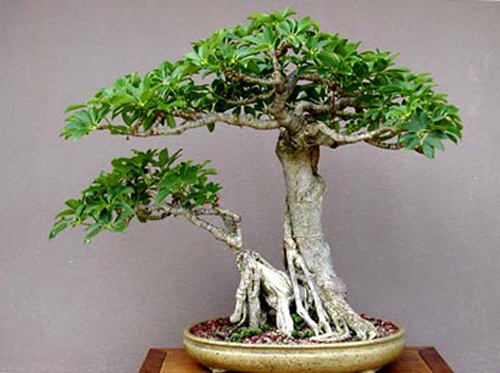
I love this schefflera by Sara Rayner, even though it’s a bit jammed in the photo. It’s completely unique and has a natural uncontrived feel. I found it and the photo below at The Art of Bonsai Project.
For a long time I thought Sara Rayner just made fine bonsai pots. I didn’t know she made fine bonsai as well. I would venture a guess that I’m not the only one who has held such thoughts, as Sara is quite well known for her pots, and less well known for her trees (at least that’s my impression). Anyway, her trees are every bit worthy of her masterful pots. Their are others in the bonsai world who make their own pots, but few who match both sets of skills so well.
sara2
Ponderosa pine and pot by Sara Rayner. Another one of a kind. The tree is unique and the tree pot combination echo that uniqueness.

Source: Bonsai Bark Read more!

Monday, July 26, 2010

Bonsai tree: Summer misting

Last summer I mentioned the practice of ‘hamisu’ which is the misting of bonsai during hot summer days. This light topical watering wets the foliage, trunk, pot and first half inch or inch of soil. It refreshes the tree.

If you water the trees in the morning on hot days, they will often need this lighter watering once or twice following that. This is especially true when the temperatures rise above 90 degrees F. Hamisu is most effective when the sun is lowering in the sky.

Be careful watering too late in the day when you have fungus problems. There is juniper tip blight, Phomopsis, to be concerned with, for instance. Any water on the foliage should dry before night sets in during the warm months.

Michael Read more!

Bonsai tree: Becoming Picasso

robinson_lodge_pole_pine_600
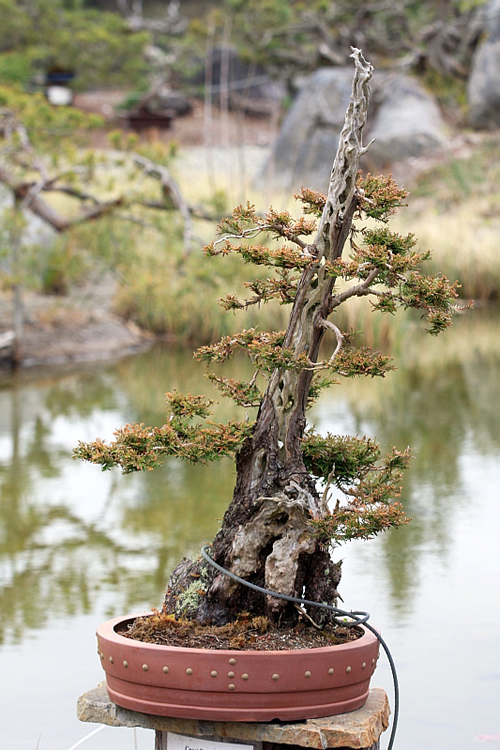
Lodge pole pine by Dan Robinson (Elandan Gardens). From The Art of Bonsai Project. Photo by Victrinia Ensor.
I didn’t make the Picasso thing up (though it’s the second time I’ve used it). It’s from a chapter entitled ‘Becoming Picasso’ in Gnarly Branches, Ancient Trees: The Life and Works of Dan Robinson – Bonsai Pioneer, by Will Hiltz. No matter who first thought to equate Dan and Picasso, I think it might be apt. Passion, willingness to break with convention, constant experimentation, a profound respect for the medium, and of course, a fair dose of natural talent, accurately characterizes both Pablo Picasso and Dan Robinson. Of course, you could have all of these things and still not be one of the all time great artists. As far as that goes, I’ll let you be the judge.
GB-PicassoExcerpt-Press 
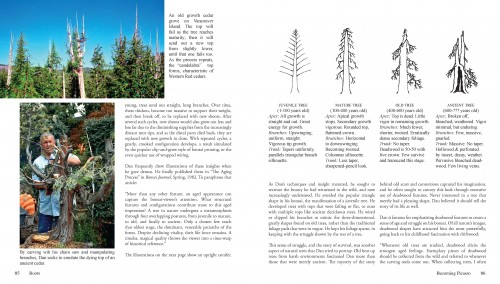
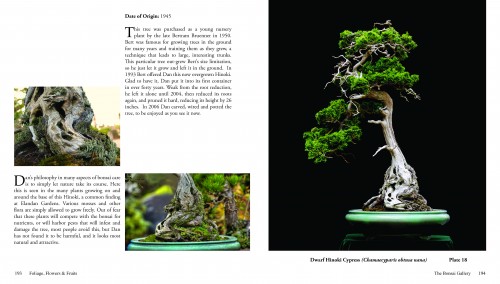
A spread from the ‘Becoming Picasso’ chapter in Gnarly Branches, Ancient Trees.

robinson_coast_redwood_600
Coast Redwood (Sequoia sempervirens) by Pablo Picasso Dan Robinson from Art of Bonsai Project. Photograph by Victrinia Ensor.

Source: Bonsai Bark Read more!

Friday, July 23, 2010

Bonsai tree: One of the Most Important (and Beautiful) Bonsai Books Ever Published Is Coming Soon

GB-Hemlock-Press
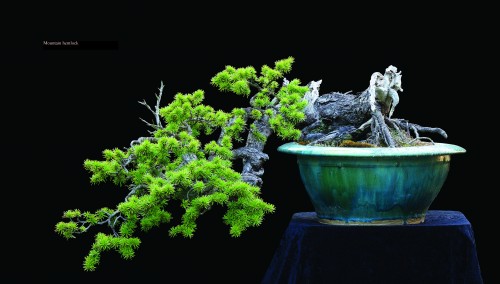
This perfect Mountain hemlock expresses Dan Robinson’s respect for how nature does it. Not that he doesn’t add his touch; he does, and it’s masterful. Photo is from the book.
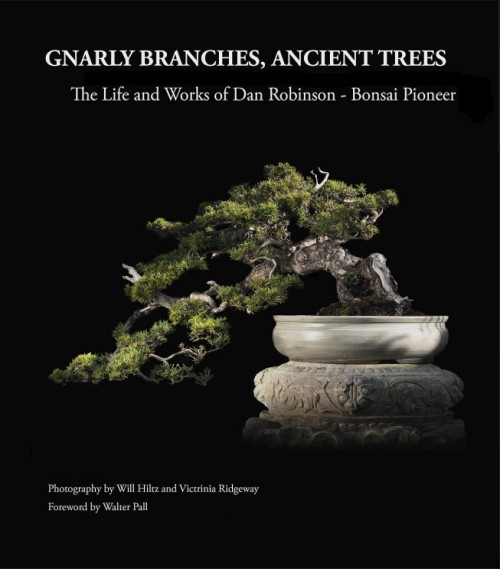
Gnarly Branches, Ancient Trees: The Life and Works of Dan Robinson – Bonsai Pioneer
This will surely be one of the most important (and beautiful) bonsai books ever published. Will Hiltz, author and photographer elevates the art of book making, and Dan Robinson, bonsai artist and master, elevates the art of collecting, growing and styling bonsai. Dan’s approach is uniquely his own and shows profound respect for trees, nature, art; the whole process that we call bonsai. Bonsai pioneer is a good choice of words to describe who Dan is. The Picasso of bonsai might be equally good.
Order yours now
High quality hardcover with dust jacket, 10 1/2″ x 9 1/2″ 292 pages. Due in October 2010. Order and pay now for earliest delivery.
GB-BruennerHinoki-Press
You could randomly open to almost anywhere in the book and come up with a spread as magical as this.
B1GNARLY-500x569 
The cover.
Visit Dan Robinson’s Elandan Gardens
Meanwhile (while you are planning your trip), visit their website.

Source: Bonsai Bark Read more!

Wednesday, July 21, 2010

Bonsai tree: Bonsai With Rebar by David Benavente

benafter4
Some serious stuff! Take a look at the before photo below to get a hit of what you can do with a piece of rebar, some nerve, and more than a little skill. All the photos in this post are of bonsai by David Benavente.
benbefore4 
Before rebar.
benafter1 
Full cascade Scot’s pine by David Benavente. You can provide the adjectives. Check out David’s site for the before photos (for this tree and two below) and some other before and after bonsai.
benafter2 
A wild looking Wild olive.
benafter3 
Savin juniper.

Source: Bonsai Bark Read more!

Tuesday, July 20, 2010

Bonsai tree: Balancing Growth on Pine Bonsai

1before
Before decandling. Cork bark Japanese black pine bonsai from Bonsai Tonight.
The photos and instructions in this post are all from Bonsai Tonight. The topic is decandling (also called candle plucking or candling pinching) Japanese black pines (specifically a cork bark black pine). The purpose of decandling is to balance bonsai growth, develop ramification and reduce needle size. Not all pines are the same, nor should they be treated exactly the same. Still, the basic principles can be applied to pines other than the Japanese black bonsai.
1after 
After decandling.

“Divide the tree’s growth into 4 zones depending on vigor. Zone 1 is the weakest, zone 4 the strongest. (See “Decandling basics” for details)
Remove the new growth in zone 2.
10 days later, remove the shoots in zone 3.
Another 10 days later, remove the shoots in zone 4.
The process takes 20 days to complete. How does it work? The longer a shoot has to develop, the more time it has to gain vigor. By removing weaker shoots before removing the more vigorous shoots, we give the weaker shoots more time to “catch up” and grow strong. Stronger shoots get less time to develop – this keeps them in check. The very weakest shoots are left alone. Decandling very weak branches can significantly slow them down or bring them to a stop. Letting them grow for a year increases their strength.”


Source: Bonsai Bark Read more!