Showing posts with label olive. Show all posts

Tuesday, November 1, 2011

Bonsai tree: Fishing for Bonsai Muscle

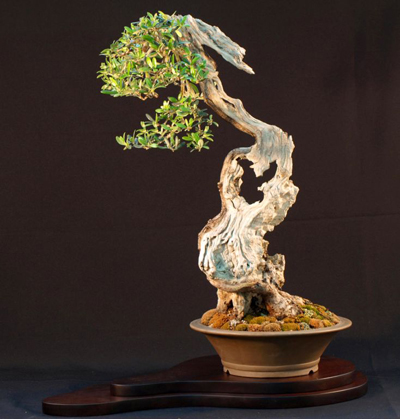
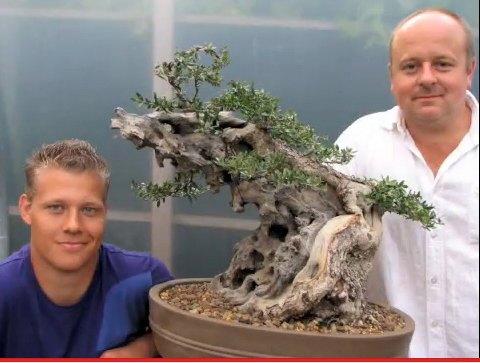
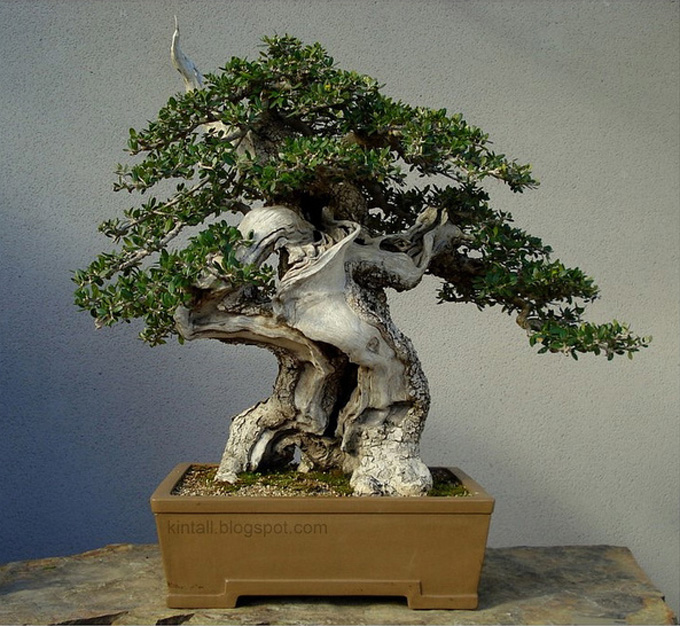
European olives are often resplendent with character as well as muscle and this one is certainly no exception (to say the least). I found it on flickr and then, one thing led to another (see Gone fishing below) and to the conclusion that this tree belongs to Luis Vallejo (though I couldn’t find evidence on his very attractive but oh-so-slow site).

Bonsai muscle

There’s something grand about bonsai with thick, powerful trunks. Assuming that I’m not the only one that feels this way, here are three exceptional bonsai (that also happen to be quite muscular) for your enjoyment.

Gone fishing

This post started as a bonsai fishing expedition that landed quite unexpectedly in Portugal, a country know for fishing. The flicr photo of the magnificent Olive above came with three bits of information: the species, Museu Bonsai Alconbendas (the results there weren’t too promising, maybe you’ll come up with something better) and, as you can see, kintall.blogspot.com, which is where the juice turns up. Kintall belongs to Rodrigo Sousa and is a bonsai gold mine, in which a little digging turns up the tree above, the two trees below and much more (that’s enough, you can take it from here if you’re interested).
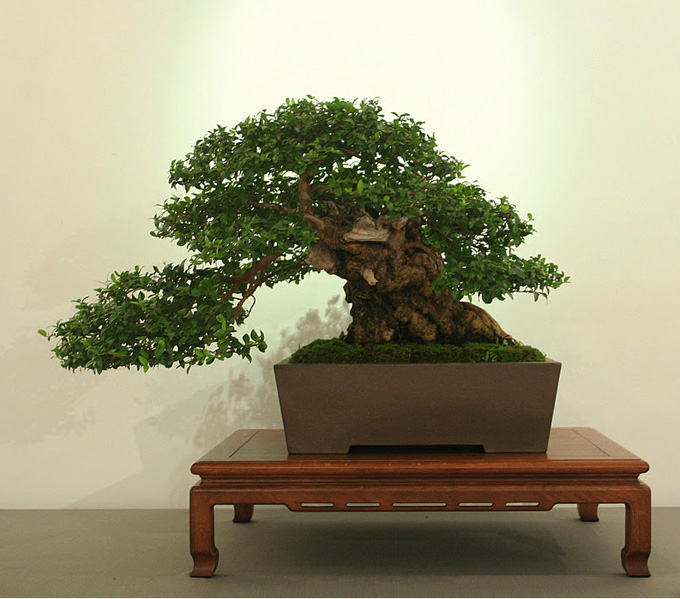
Myrtus communis by Rui Ferrreira. I’ve never seen a Common myrtle with a heavy trunk, let alone one as massive as this one. The photo is from the EXPOS PORTUGAL – 3º Congresso Federação Portuguesa de Bonsai – Ericeira 2011. You can find it on Kintall’s home page).
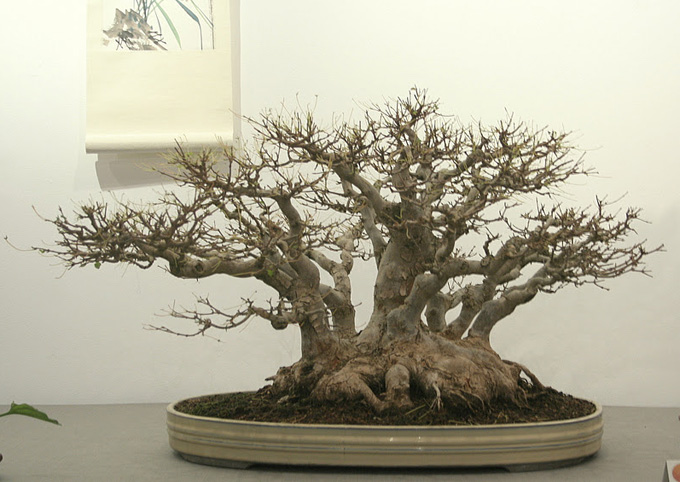
Muscle with nine (?) trunks. This Trident, by Jose Machado, shows a nebari kind of muscle, but still, muscle it is. Also from EXPOS PORTUGAL – 3º Congresso Federação Portuguesa de Bonsai – Ericeira 2011, on Kintall’s home page).

Source: Bonsai Bark Read more!

Thursday, June 23, 2011

Bonsai tree: Whoops! Mea Culpa

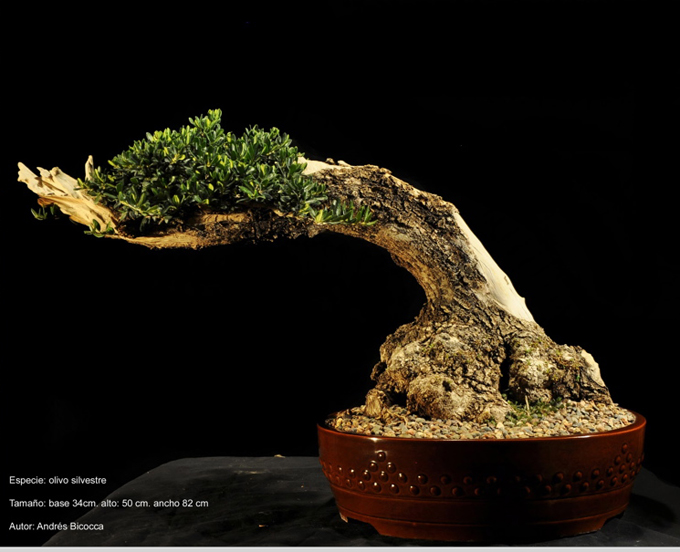
This one is an olive. And it is by Andres Bicocca. Who is from Argentina and isn’t from Uruguay. BTW: the way the foliage mass clings to the trunk, makes for a unusual looking bonsai. Though it has a wild, ‘work in process’ look, there’s something compelling about it with its strong nebari and well aged bark.

Egg all over my face

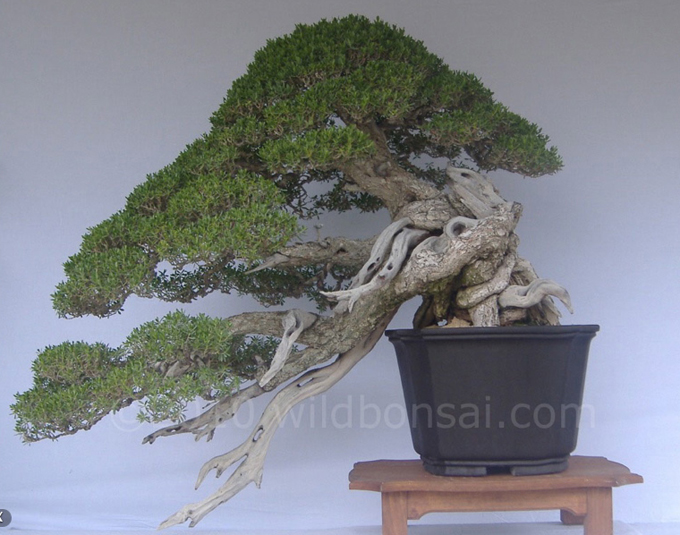
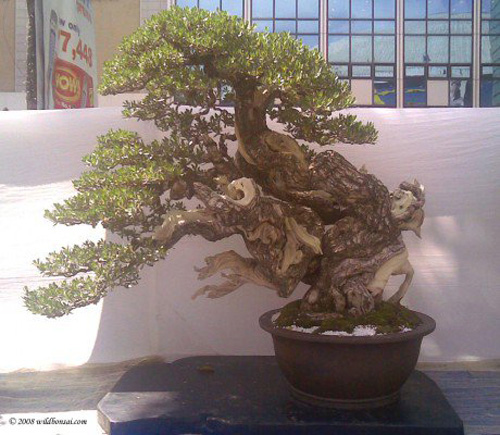
First, apologies to Argentinian (not Uruguayan) bonsai artist Andres Bicocca (see three posts ago). Second, apologies to Wild Bonsai; not only did I mis-attribute one of their trees but I mis-identified it as well (doubly embarrassing when you consider that their name is on the photo and the tree is clearly identified where it appears on Andres’ wall photos – thanks to to my virtual friend and unofficial fact checker Jose Luis Rodriguez for noticing this glaring error). It’s a Phemphis acidula, not a European olive (Olea europaea). So thanks Jose for keeping us honest and thanks Andres for your understanding, and thanks Wild Bonsai too.


Another of Wild Bonsai‘s impressive trees. Our original mis-identified Wild Bonsai tree is below. Both are Phemphis acidula.

Here’s the one I got all wrong. Notice the fine print on the bottom of the photo.


Source: Bonsai Bark Read more!

Tuesday, March 22, 2011

Bonsai tree: More from BABA’s 29th Annual Exhibit

Source: Bonsai Tonight
More from BABA’s 29th Annual Exhibit

Bay Area Bonsai Associates’ 29th Annual Exhibit featured large bonsai as well as smaller trees. Here are some of the medium and small bonsai on display.

Korean Hornbeam

Korean hornbeam

Crabapple

Crabapple

Olive

Olive

Boston Ivy

Boston Ivy

Japanese black pine

Japanese black pine

Korean Hornbeam

Korean hornbeam

Zelkova

Zelkova

Grape

Grape

Pomegranate

Pomegranate

Crabapple

Crabapple

Accent plant

Accent

Accent plant

Accent

The exhibit opened with an impressive demonstration by Ryan Neil on Saturday night. Neil followed the demonstration with a workshop on Sunday.

Workshop tree

Workshop tree – California juniper

I was impressed by what I saw around the room – I’m looking forward to seeing more of Neil’s work in the future. Read more!

Friday, January 21, 2011

Bonsai tree: Members’ Choice Awards

Source: Bonsai Tonight
Members’ Choice Awards

Bay Island Bonsai held their 12th annual exhibit last weekend at the Alameda County Fairgrounds. The show was a big success, drawing several hundred bonsai enthusiasts from around the country.

Each year a handful of trees receive Members’ Choice Awards. Here are the 2011 winners.

Western juniper - ogata

Ogata (large) conifer bonsai – Western juniper


Ogata deciduous or broadleaf bonsai – Ficus benjimina


Chuhin (medium) conifer bonsai – Japanese black pine


Chuhin deciduous or broadleaf bonsai – Corkbark elm


Kifu (medium-small) conifer bonsai – Japanese white pine ‘Myojo’


Kifu deciduous or broadleaf bonsai – Olive


Shohin (small) conifer bonsai – Japanese black pine


Shohin deciduous or broadleaf bonsai – Flowering quince ‘Chojubai’

Bay Island Bonsai members have been judging their exhibit trees from the first exhibit to the present. While the details may change a bit from year to year, the basics remain the same:

  • Members vote for their top choice in each category
  • Winning trees are not eligible to win again for five years

As our teacher, Boon doesn’t get a vote, and his trees are not eligible for voting. To help the rest of us identify winners, Boon runs practice judging exercises throughout the year. We use a simple judging form for these exercises with the following categories:

  • Trunk (10 pionts)
  • Roots (5 points)
  • Branches (5 points)
  • Pot (5 points)
  • Overall aesthetic (5 points)

By evaluating trees on the above criteria, we can refine our skill at recognizing excellence in each category. I’ve always enjoyed the exercise, and I found it useful this year as there was strong competition in several categories. Read more!

Thursday, November 18, 2010

Bonsai tree: More from GSBF Convention Exhibit

Source: Bonsai Tonight
More from GSBF Convention Exhibit

The GSBF XXXIII Convention Exhibit included more stones than bonsai. The two ends of the exhibit hall were devoted to suiseki, and some of the stones were displayed in more formal arrangements. The composition below was created by Mas Nakajima.

Suiseki

Suiseki display

Another suiseki display featured a large scroll and accent plant.


Suiseki display

The remainder of the suiseki were displayed along the walls of the exhibit room.


Suiseki
Read more!

Friday, November 5, 2010

Bonsai tree: Golden State Bonsai Federation XXXIII Convention Exhibit

Source: Bonsai Tonight
Golden State Bonsai Federation XXXIII Convention Exhibit

The Golden State Bonsai Federation (GSBF) held their 33rd Annual Convention, “New Faces,” last weekend in Santa Clara, California. As always, the Convention featured a bonsai and suiseki exhibit. Bonsai were displayed in formal arrangements with accents – suiseki displays book-cased the bonsai at opposite ends of the room.

Although the exhibit was not large, it did a good job of representing California bonsai with trees from different parts of the state. I hope in future years the exhibit can grow larger. California is host to many bonsai clubs and has many fine trees, making the GSBF convention an excellent venue for showcasing the state’s collections for bonsai enthusiasts and the general public alike.

For those who couldn’t make it this year, here are photos of the trees in the exhibit.

California Juniper

California juniper


Trident maple


Crabapple

Hinoki


California juniper
Read more!

Sunday, June 27, 2010

Bonsai tree:Three Trees For Your Viewing Pleasure

Bmania, by Marcelo Martins
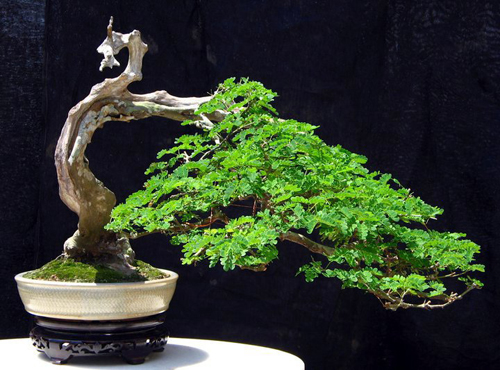
Brazilian Rain Tree? Mimosa? Whatever it is, it’s from Bonsaimania (via facebook) and it’s by Marcelo Martins.
1276209287
I’m pretty sure this compellingly eccentric old tree is an olive (Olea europaea). Unfortunately, I stuck it on my desktop a while back but neglected to label where it is from and who it’s by. Anyone?
1276294867
Here’s another one that looks suspiciously like an olive. Just like the one above, the artist will remain unidentified until someone clues us in.


Source: Bonsai Bark Read more!

Thursday, June 24, 2010

Bonsai tree: Beware the Terriers!

aaagood
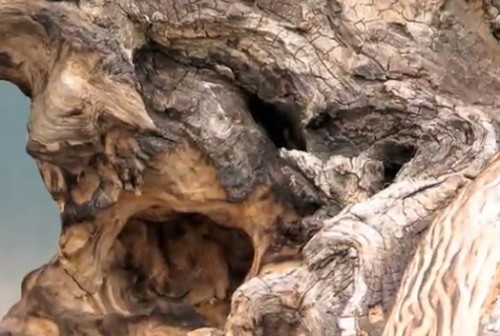
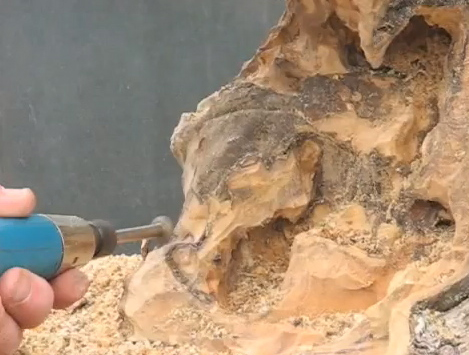
A good mix of freshly carved and aged olive wood. The carving was done by Graham Potter. The aged wood is courtesy of Mother Nature and Father Time.
The shots here are from a wood carving demo by Graham Potter; one of many in an excellent, ongoing series.
aaamid
Terrier attack!
aaaGarham&friend
Finished for now. That’s Graham on the right.

Source: Bonsai Bark Read more!

Wednesday, March 31, 2010

Bonsai tree: Bonsai balance

There are few concepts more central to bonsai than “balance”. The California buckeye below strikes me as a well-balanced composition. The foliage, ramification, trunk, pot and stand all work well together.
California Buckeye – Aesculus californica
The photos here are from the Bay Area Bonsai Associates’ 28th annual show. Like so many good exhibits, it provides ample opportunities for thinking about balance.
The cryptomeria below is a favorite of mine. There are few good examples of the variety around, and only a fraction of these are shohin. When I squint my eyes and focus on the tree’s silhouette, however, I notice that the trunk is surprisingly thin. For the foliage to be balanced with the trunk, I would expect either a thicker trunk or thinner foliage – a subtle point for such a nice specimen.
Cryptomeria japonica
Read more!

Friday, February 5, 2010

BIB’s Annual Bonsai Exhibit

BTNight
I lifted this sinuous Ponderosa pine (Pinus ponderosa) off a great gallery at Bonsai Tonight from the 2010 Bay Island Bonsai Exhibit. Though I can’t tell for sure, it looks like at least five full twists in the trunk.
Westernjun
Here’s another heavy-trunked bunjin. It’s a Sierra juniper, also known as Western juniper. It and it’s close cousin, the California juniper are becoming favorites of bonsai enthusiasts here and abroad.

Read more!

Saturday, January 30, 2010

Shohin exhibition

Shohin has a fun place in the bonsai world. One of the best events in shohin world that I know about is the biannual event held by the California Shohin Society in Santa Nella, CA. The next one is a week away – visit Shohin Seminar 2010 for details.
One of my favorite unproductive discussion topics focuses on the maintenance of large or small bonsai. Unfortunately I can not reproduce even the tenor of the greatest expounding on the topic I have witnessed, but if you’re curious, find Guy Guidry after dinner at your local bonsai convention and fire away.
Here are some photos of shohin on display at Bay Island Bonsai’s 11th annual exhibit.
Japanese Maple
Read more!

Wednesday, January 20, 2010

A Connoisseurs Photo Gallery

olive
The gnarled, cracked deadwood tells this old olives story. Yixing pot.
carpinus
The masive old trunk with its bumps and crack that tell an ancient story, captures our eye; but what about the fine branching on such a small tree? This type of refinement that is often overshadowed by thick trunks and dramatic deadwood, also tells a story; a story of time put in triming and wiring and waiting for new shoots to grow. Read more!

Friday, January 8, 2010

Melba Tucker’s Olive and Suiseki

tuckerolive

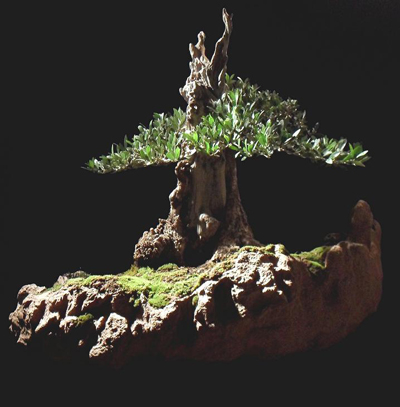
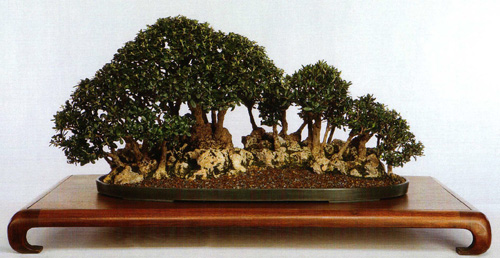
This dramatic European perfect olive forest on a rooted burl is by Melba Tucker. It is borowed from The National Bonsai Foundations 2008 calendar.

Though it goes without saying
This old gem looks like a forest growing on a rocky ledge somewhere in Spain and though it goes without saying, I will say it anyway: it is one of the most wonderful, natural looking forest plantings anywhere. If you are ever anywhere near Washington DC, check it out. It’s at the National Bonsai and Penjing Museum.

melbasui2

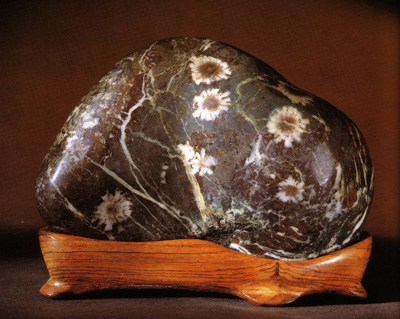
Melba found this distinctive American Pattern Stone in the Mojave Desert. The photos are by Peter Bloomer. Peter and his wife, Mary Holmes Bloomer are the editors.


suimelba

A Chrysanthemum stone from Japan. Read more!