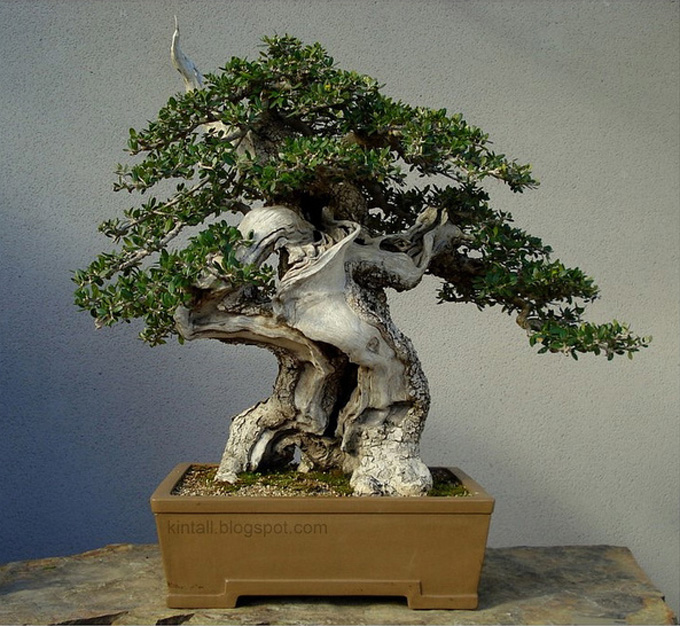
 European olives are often resplendent with character as well as muscle and this one is certainly no exception (to say the least). I found it on flickr and then, one thing led to another (see Gone fishing below) and to the conclusion that this tree belongs to Luis Vallejo (though I couldn’t find evidence on his very attractive but oh-so-slow site).
Bonsai muscle
There’s something grand about bonsai with thick, powerful trunks. Assuming that I’m not the only one that feels this way, here are three exceptional bonsai (that also happen to be quite muscular) for your enjoyment.
Gone fishing
This post started as a bonsai fishing expedition that landed quite unexpectedly in Portugal, a country know for fishing. The flicr photo of the magnificent Olive above came with three bits of information: the species, Museu Bonsai Alconbendas (the results there weren’t too promising, maybe you’ll come up with something better) and, as you can see, kintall.blogspot.com, which is where the juice turns up. Kintall belongs to Rodrigo Sousa and is a bonsai gold mine, in which a little digging turns up the tree above, the two trees below and much more (that’s enough, you can take it from here if you’re interested).
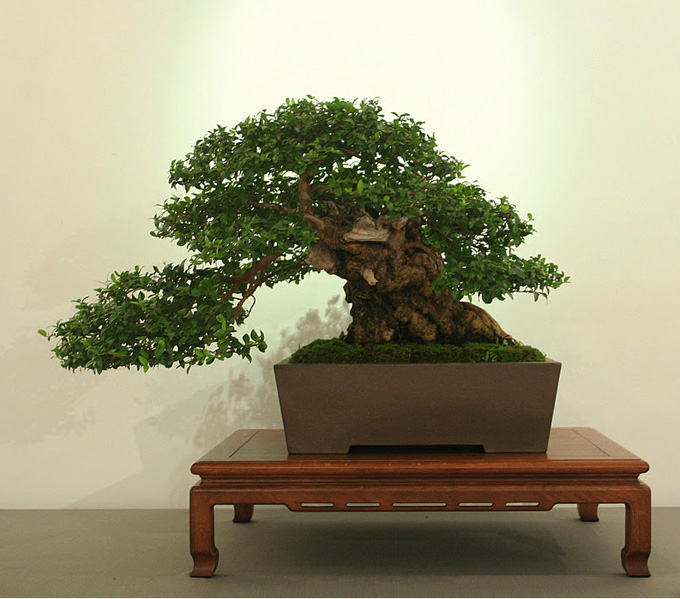 Myrtus communis by Rui Ferrreira. I’ve never seen a Common myrtle with a heavy trunk, let alone one as massive as this one. The photo is from the EXPOS PORTUGAL – 3º Congresso Federação Portuguesa de Bonsai – Ericeira 2011. You can find it on Kintall’s home page).
 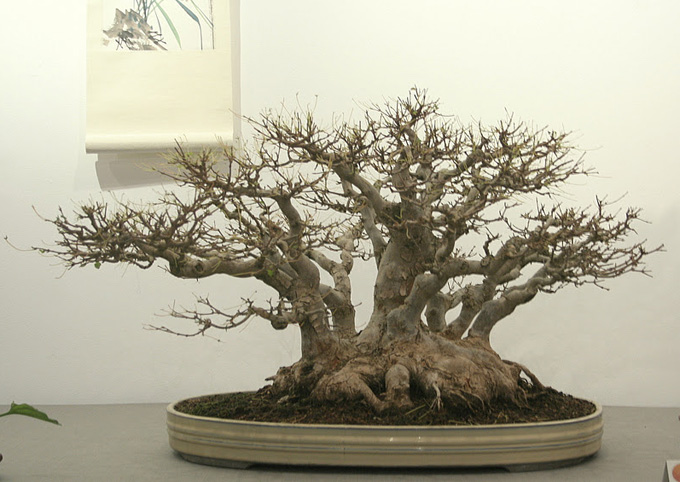 Muscle with nine (?) trunks. This Trident, by Jose Machado, shows a nebari kind of muscle, but still, muscle it is. Also from EXPOS PORTUGAL – 3º Congresso Federação Portuguesa de Bonsai – Ericeira 2011, on Kintall’s home page).
Source: Bonsai Bark Read more!


