By the time I've researched this amazing art, I discovered some additional bonsai classification. In most of the sources it was talking about size, trunk number and style classification of bonsai. Next I will give you some information about it.
Considering the sizes, to be exact trunk height bonsai, we can speak about three basic groups: mini-bonsai, average bonsai and big bonsai. The height is measured from the basis to the top of a trunk without height of the landing container.
Mini-bonsai, named in Japanese «shohin», forms a group into which enter tiny bonsai with the height of a trunk to be from 8 to 15 centimetres. Distinctive property — fragility and intensive leaving. Their small sizes demand the constant control over conditions of cultivation, reduction of the time break between chopping the plant and its change. It is necessary to give particular attention to the soil condition, their landing containers have small sizes and limited volume of a substratum which suffers from fast evaporation and flooding by water. It is necessary to follow invariable conditions of cultivation of these bonsai as their small vital reserves and vulnerability can lead to death of the plant from a cold or the superfluous sun. Trees of this group possess the big decorative value.
Having reached heights of sixty centimetres, plants get to the second bonsai group which, in turn, is subdivided on two subgroups: Subgroup of "Komono" (Komono) with plants from 15 to 30 centimetres in height and "Chumono" (Chumono) with bonsai from 30 to 60 centimetres. Plants of both subgroups concern the most widespread bonsai as have proportions very convenient for work which favorably affect appearance of the plant.
And, at last, to the third group big bonsai, or "Omono" (Omono), belong plants which can reach one meter in height. The majority of plants of this group are majestic and occupy the considerable space. Owing to these features them place outside of the house where they ideally look.
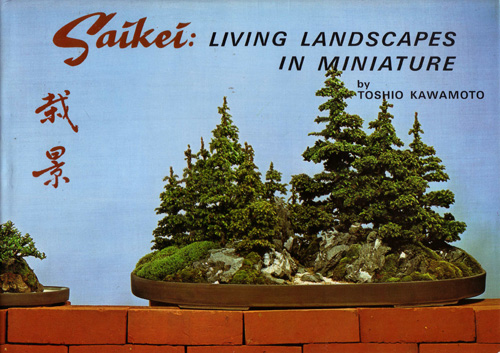
Often in containers there are some trees belonging to one kind or several trees, forming a group or forming a small landscape. There are trees, growing with one trunk from one root system. These are the most widespread bonsai and the majority of existing styles is based on them. On the other hand, there are species that own some trunks growing from one root, known as multi-trunks bonsai grow. Usually gardeners create landscapes with more trunks, each of which having a separate root. In this group, except for the first kind formed in pair of trees, bonsai are grown up with odd quantity of trunks.
This is the usual classification, which is often recognized by the all bonsai lovers.
Irrespective of the sizes and features of bonsai style, all of them are grown up by means of the same receptions. The aesthetic norms defining appearance of each copy, can differ, presenting thus original decisions so unlike against each other. From here there is a distinction of bonsai styles. Paramount value is given to an arrangement of a trunk and branches though also the form of roots in some cases is considered. Bonsai style is an artificial way of cultivation of vegetative kinds.
Occurrence of styles is based on supervision over the nature, and any deviation from it, so valued in gardening, that should be resolutely separated from the traditional bonsai concept. It is important to keep communication between a grown up tree in bonsai style and wild plants. An example: there is a copy which belongs to a kind living in the marshy, fertile environment. We even couldn't think of beginning its formation in style "cascade" or «roots on a rock» because in the nature such situation is not viable. Styles differ with an inclination between a trunk of a plant and the container, an arrangement of branches and roots and configuration of several copies bonsai within one container. To the basic styles «the slanting tree» and "cascade" belong «formal upright».
Read more!

 known and one of the most popular - Juniper bonsai. It habituates in the northern hemisphere of the World. For growing a bonsai, it best suits species form South-Est of Europe and Asia.
 Every king of Juniperus sp. is felling well under high-level sun radiation, but suffers being in a dark place(except heated seasons, when we talk about young plants).Juniper is very steady to most uncomfortable weather state and temperature, though when it is frosty weather you should guard its rhizome. Juniper does not attach to the group of plants which needs a lot of watering, so it is recommended not to water until the soil is fully dry. It is also not recommended to settle the plant in high humidity environment. Adding nutritive material best suits to a warm time of the year in a moderate way. You should not abuse using nutritions, when it is a favorabil season to browse.
 Because of the low growth it is not a must to cut branches for changing the direction of the trunk, but it would be much more useful to wire, that could be done in autumn and un-wire not earlier than 7-8 months.
 With the help of fungicide, especially sistematical, you could get rid of it. In this case you should necessarly remove dry branches, to eliminate the possibility of uncontrolable spreading of the fungus.
Read more!
With the help of fungicide, especially sistematical, you could get rid of it. In this case you should necessarly remove dry branches, to eliminate the possibility of uncontrolable spreading of the fungus.
Read more!


