Friday, February 4, 2011

Bonsai tree: Penjing

Source: Bonsai Tonight
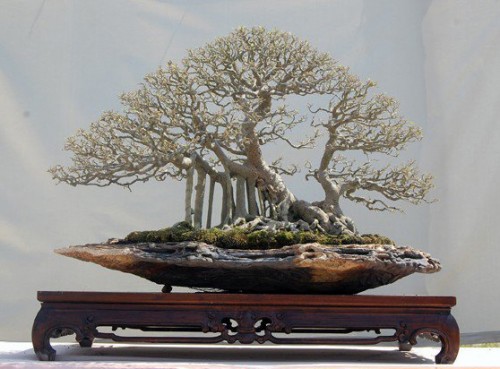
Penjing

Bay Island Bonsai’s recent exhibit included a penjing display – a rare occurrence for the event. As time passes, I find I’m more concerned with improving the quality of the trees in the exhibit each year – and keeping the event fun. This piece has fun in spades.

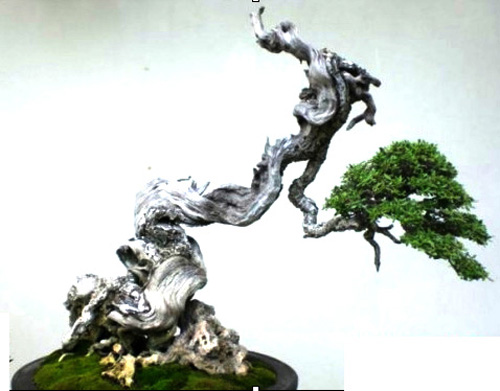
Juniper penjing

Penjing with shimpaku

Shimpaku

Shimpaku

Shimpaku

Cascade shimpaku

Shimpaku

Shimpaku island

A number of figures have popped up in the past few BIB exhibits. The most striking example appeared in 2010. This year’s display boasts the greatest variety of figures.

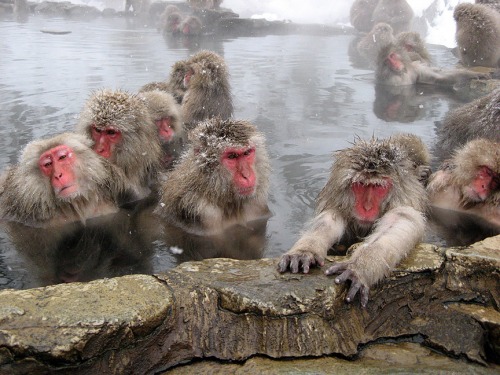
Monkeys

Monkeys

Frog

Frog

Figure

Figure

Pagoda

Pagoda

Coy technique

Mise-en-scène with Golden Alligator

It takes a lot of work to get the details right. Kudos to Jeff for making the effort.

Coy technique

The curator at work

Like groves, penjing tend to be very accessible to visitors who are new to bonsai. While some bonsai are quite abstract in design, penjing and forest scenes are immediately identifiable – and fun!


Sunset on shimpaku island
Read more!

Bonsai tree: Wouldn’t You Like to Find a Tree Like This?


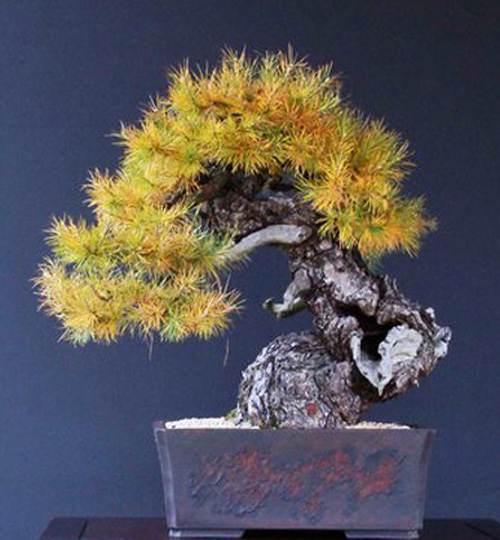
Wouldn’t you like to find a tree like this when you are out collecting? This is a cropped version of
Autumn, by Giacomo Pappalardo. From his facebook wall photos. I assume it is Giacomo’s, though I find no mention of it anywhere; just the photo.

A trunk with everything

This funky (in the good sense) trunk has everything: shape, massive girth, aged bark, a natural looking hollow (sabamiki) and a perfect touch of deadwood. Though you could make an argument for hiding some of the trunk’s heaviness near the top (the dark hole above the jin), I imagine Giacomo decided to show it because it expresses even more of the tree’s age and character.


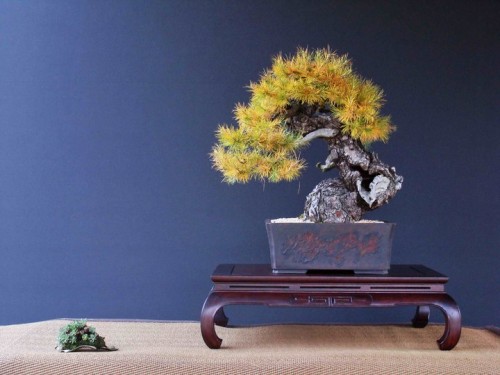
The uncropped original.


Suspiciously like a larch

Giacomo doesn’t say, but this gloriously aged, powerful little tree looks suspiciously like a larch. What other conifer has fall color (yellow no less)? And larch bark? I wonder which larch it is? European (Larix decidua)? Giacomo lives in Spain. Or maybe Japanese (L. kaempferi)? I imagine some Japanese larch have found their way to Europe, though this one definitely looks like a yamadori (collected in nature), so it’s more likely local. Anyone out there know more about this tree? Anyone care?


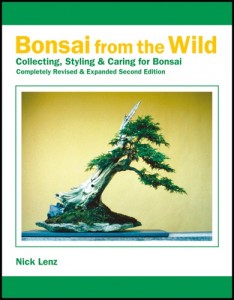
Though it’s not just about larches (that’s a Northern white cedar on the cover), still, this is the ultimate larch book, by the Larch Master, Nick Lenz. Available at Stone Lantern (discounted, no less).


Source: Bonsai Bark Read more!

Sunday, January 30, 2011

Bonsai tree: Michael’s Return (x 2 + Kokufu)


A
luscious white pine that Michael Hagedorn wired in hopes that it will be accepted into the famous Kokufu Exhibition.

Michael Hagedorn is back

After a two plus month hiatus, Michael Hagedorn has suddenly resurfaced on Crataegus Bonsai, and in Japan no less. This is good news. Not only does it solve my problem (another day, another post; how can I keep this interesting?), but it also gives us a further glimpse into the life and times of our favorite American apprentice in Japan (Michael has a delightful book on the subject).

We won’t spill all the beans

Rather than simply steal Michael’s last two posts, we’ll just show you a few photos to whet that old appetite. After that, it’s up to you to make the short and simple journey over to Crataegus Bonsai.


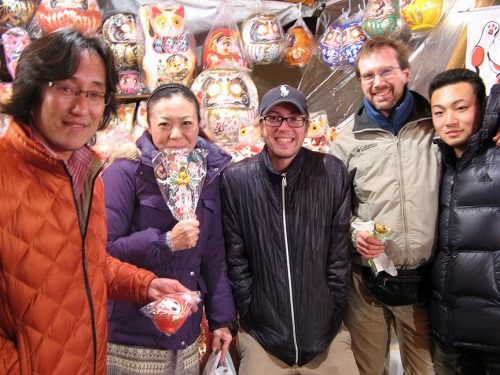
Suzuki, Michael and friends. We usually just stick to bonsai and stay clear of the social scene, but this photo is just too good to pass up. Shinji Suzuki (Michael’s sensei) is on the left and Michael is second from the right. You can visit Crataegus for the complete cast of characters.


A few of Michael’s other friends.


Source: Bonsai Bark Read more!

Friday, January 28, 2011

Bonsai tree: Growing Your Own Maple Bonsai

Red Maple
Bonsai trees need tender, loving care and may need extra effort from you to grow and thrive. But, they will reward you with their natural beauty.

The Maples are very vibrant and beautiful trees. They are very leafy and have a full appearance. In the fall, as the leaves are turning, they will turn to yellow and red, this makes a fantastic display.

This is why they are beautiful as Bonsai trees and they tend to thrive well if kept right. The ideal conditions they need combine partial sun and shade for healthy growth.

In the winter, pay particular attention to the roots as they may die if they get too cold. The do not need as much water in the winter, either.

Maples prefer moist soil, so make sure that they have an adequate amount of water daily. Also, make sure there is adequate drainage so that you do not over water it.

These trees do well as informal uprights because of their leafy nature. They may be trained as a cascade but be very careful as you can split the trunk if you do not handle the them delicately. Remember these trees are a long term project and so take your time if training or shaping them.

Some people prefer to wire the tree into a curve. However, this looks and is unnatural for the maple tree. It is recommended that you prune it and work towards a gentle curve. If you are determined to cascade it however, be careful because the tree could scar from any trauma.

Feed the tree approximately once a month. A fertilizer is needed to assist with the growing process, however, do not over do it.

These trees are hearty and must be pruned back fairly regularly. You can also trim the roots if you believe it is getting too large.

It is best to prune the branches in late Fall and Winter when most of the leaves have dropped off. You may want to use a paste to cover the wound once a branch has been cut off.

It may be difficult to determine at times, how much growth is necessary and what needs to be scaled back. The object is to have a miniature rendition of a real tree. Ideally, it should not look like an ordinary houseplant if this is the case it has over grown.

The tree needs to be re potted on a regular basis, typically, every one to two years. When repotting use a mixture of soil, sand and peat.

They can be a very challenging, yet rewarding to grow. Try to obtain as much information in advance so you know what to expect and will be on the alert if there are any problems. Most of all, have fun and enjoy the tree for years to come. Read more!

Thursday, January 27, 2011

Bonsai tree: Bonsai Indonesia & Sherlock Holmes

silky

Graceful simplicity contrasted with a wild shape and texture make for a striking bonsai. I lifted this photo off of a facebook page titled ‘Bonsai Indonesia‘ by Silky Jemiran. The owner is listed as Zhylonk Kiakiz Alfarizhy. I did not commit the sin of chopping off the pot, though I did adjust the image to take out background noise.

Sherlock Holmes

Sometimes tracking down the real owner of a bonsai that appears on facebook requires the imagination and determination of a Sherlock Holmes. Even then, you can’t always be sure you’ve got it right.

Problem solved?

When I first saw the tree above, I thought it might belong to Silky Jemiran. Then I noticed that he listed the owner (see above). He also listed the owners of the two trees below. Problem solved (provided Silky got it right). However, in many cases, the owner isn’t listed and you might assume (often incorrectly) that the person who posts the photos is the owner. This is where Sherlock Holmes comes in handy.

167352_158025934246817_100001182331104_288321_5773030_n

There’s a lot going on here. Not the least of which are: some very distinctive aerial roots, a funky nebari, excellent ramification, a perfect silhouette and what looks like a very well suited earthy, handmade pot. Silky lists Wayan Suwendra as the owner.

silky2

Root-over-rock perfection. Everything works here; including the way the tree and rock merge into one dynamic form and the way the rocks on the left mirror the sweeping horizontal branch. Then there’s the well chosen pot that quietly provides a sense of earth and balance. Silky lists Rudi Julianto as the owner.

Source: Bonsai Bark Read more!

Tuesday, January 25, 2011

Bonsai tree: Akio Kondo Bonsai Award – 2011

Source: Bonsai Tonight
Akio Kondo Bonsai Award – 2011

Bay Island Bonsai members were happy to entertain a visiting bonsai professional from Japan at their recent exhibit. Akio Kondo was in Northern California to visit the exhibit, to work on client trees, and to teach. While at the exhibit, Kondo selected a tree for a new award, the Akio Kondo Bonsai Award. The winning tree was a Korean hornbeam.

Korean hornbeam

Korean hornbeam, Carpinus turczaninovii, 16″ – Raho pot


Side view

I was very happy – and surprised! – to learn that my hornbeam had won the award.


Kondo presenting the award

On January 15, 2011, at the annual bonsai exhibit of Bay Island Bonsai, this award was given to the owner of the bonsai deemed most worthy of the award in this year’s exhibit according to Akio Kondo.

The award included a Japanese bonsai pot and an autographed copy of the 2010 Sakufu-ten show book – an event at which Kondo took the second most prestigious prize for exhibiting a beautiful hinoki he has worked on since 2005.

I have worked on this hornbeam since 2002. The trunk was in good shape when I acquired the tree but the branches lacked character so most were removed or pruned severely, as was the previous apex. Nine years later, the tree is starting to develop a more mature silhouette. Here is the tree as it was displayed at the exhibit.

Korean hornbeam and shimpaku as displayed

As displayed with small shimpaku and accent

I am very honored to accept this award and I hope I can continue to improve the tree as it ages.
Read more!

Saturday, January 22, 2011

Bonsai tree: A Little Change of Pace: Robert’s Tokonoma &…

robert'stokonoma

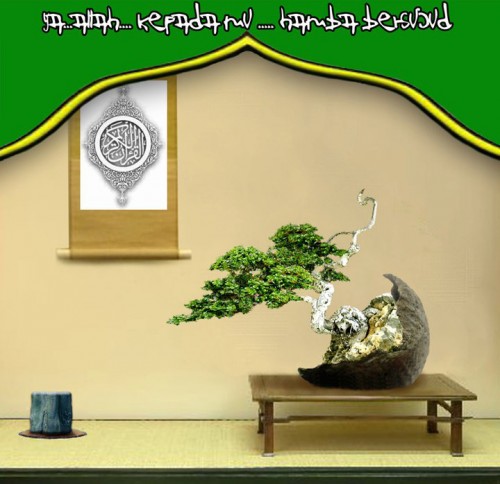
Definitely not Japanese. From Echo of My Heart, a series of photos of the bonsai art of Robert Steven.

Tokonomas

Not too long ago we featured a tokonoma by Bill Valavanis. To me, Bill’s tokonoma stands clearly in the Japanese tradition, with maybe a touch of Bill to distinguish it. In this case, we’ve got something a little different. It’s a tokonoma by Robert Steven, and though I’d say there’s a nod to the Japanese tradition, there’s clearly something quite different going on. A little Indonesia? A little something else? And, as is often the case with Robert Steven, more than a little daring.

Alive

Though it might be easy to lose track (miss the tree for the forest, so to speak), the bonsai that graces this unusual scene is a real show stopper. Elegant, flowing, dynamic, alive, robust, wild and just plain beautiful.

robertscene

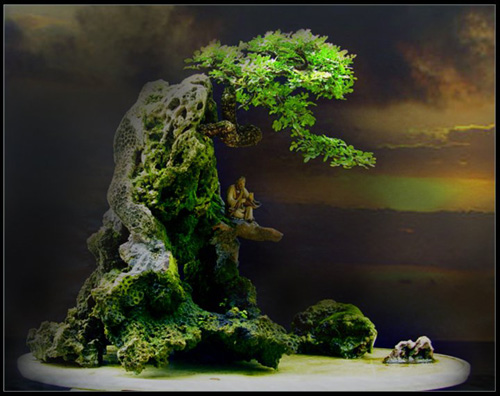
More art by Robert from Echo of My Heart. Though not a tokonoma, the planting and the background create a powerful scene.

A question and an opinion

Does the man on the ledge distract from the tree and the rest of the planting? Or is it just me? I’ve noticed how often I seem object to strong figures in plantings. Especially human figures.

Another opinion and another question

Usually I don’t care for dramatic scenes as backdrops for bonsai. Somehow though, this one works. Maybe it’s because it’s not overdone. There are some sun rays (often an overly dramatic statement), but they are subdued and contrasted with the clouds and fog in a way that seems natural. Anyone else?

Robert Steven’s books

Robert Steven is a highly acclaimed bonsai artist, teacher, author and frequent contributor to Bonsai Bark. His books are Vision of My Soul, and Mission of Transformation; with more in the works.

Source: Bonsai Bark Read more!

Friday, January 21, 2011

Bonsai tree: Members’ Choice Awards

Source: Bonsai Tonight
Members’ Choice Awards

Bay Island Bonsai held their 12th annual exhibit last weekend at the Alameda County Fairgrounds. The show was a big success, drawing several hundred bonsai enthusiasts from around the country.

Each year a handful of trees receive Members’ Choice Awards. Here are the 2011 winners.

Western juniper - ogata

Ogata (large) conifer bonsai – Western juniper


Ogata deciduous or broadleaf bonsai – Ficus benjimina


Chuhin (medium) conifer bonsai – Japanese black pine


Chuhin deciduous or broadleaf bonsai – Corkbark elm


Kifu (medium-small) conifer bonsai – Japanese white pine ‘Myojo’


Kifu deciduous or broadleaf bonsai – Olive


Shohin (small) conifer bonsai – Japanese black pine


Shohin deciduous or broadleaf bonsai – Flowering quince ‘Chojubai’

Bay Island Bonsai members have been judging their exhibit trees from the first exhibit to the present. While the details may change a bit from year to year, the basics remain the same:

  • Members vote for their top choice in each category
  • Winning trees are not eligible to win again for five years

As our teacher, Boon doesn’t get a vote, and his trees are not eligible for voting. To help the rest of us identify winners, Boon runs practice judging exercises throughout the year. We use a simple judging form for these exercises with the following categories:

  • Trunk (10 pionts)
  • Roots (5 points)
  • Branches (5 points)
  • Pot (5 points)
  • Overall aesthetic (5 points)

By evaluating trees on the above criteria, we can refine our skill at recognizing excellence in each category. I’ve always enjoyed the exercise, and I found it useful this year as there was strong competition in several categories. Read more!

Wednesday, January 19, 2011

Bonsai tree: A Touch of Spring

167075_160887827292133_100001127493299_316970_7347768_n

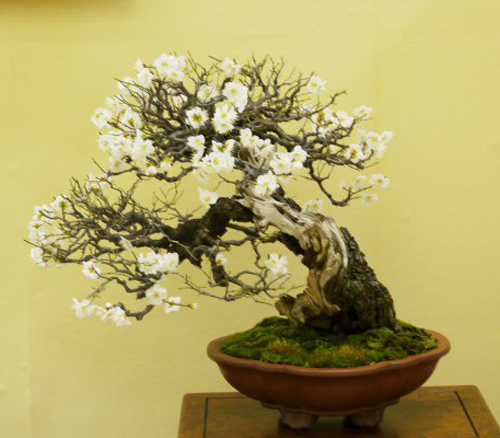
The flowers are white, and we’ve got plenty of white stuff on the ground here in Vermont. That’s as far as it goes, but we can dream. The photo is from Bonsai Guest House Osaka (facebook). Here’s their website. It’s hard to tell for sure, but I’m guessing it’s a Ume (Flowering apricot). I’m told that Ume is one of the few deciduous trees holds deadwood for a long time.

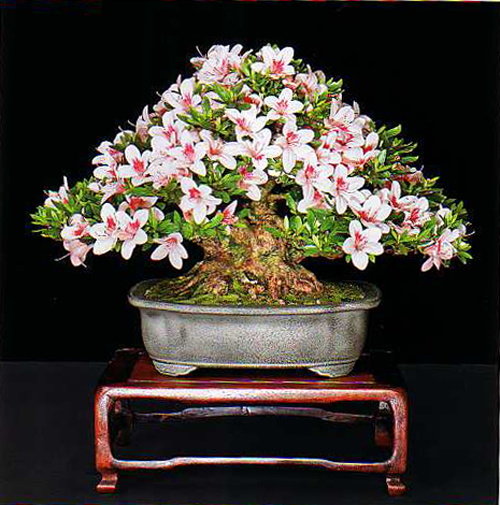
B1NAT2azalea

More than just a touch. I like it when azaleas show some leaves when they bloom, like this one. Sometimes you see them completely covered with flowers, which can seem a little unnatural and overdone. This magnificent Nyohozan Satsuki Azalea belongs to Melvyn Goldstein. Its height is only 10 inches (25cm). It, along with nearly two hundred other of North America’s greatest bonsai, can be found in the 2nd U.S. National Bonsai Exhibition Album.

A brief word from our sponsor

We have both the first and the second U.S. National Bonsai Exhibition Albums in stock. And our powerful but sweet book sale is still happening. This is your chance.

Source: Bonsai Bark Read more!

Bonsai tree: just opened the Kiln

The last firing before travelling to Noelanders Trophy in Belgium. I was delighted to see these 2 slightly new designs (for me anyway) looking as good as anticipated, especially since they are both commissions. The red/brown oxide one is a particularly complicated shape to hand build, the finish on both pots has the “aged” look that is so important to me, in my work.

I look forward to seeing many old friends in Belgium at the weekend.


Read more!