Showing posts with label bonsai forest. Show all posts

Saturday, December 4, 2010

Bonsai tree: Bonsai Gallery: Five Magnificent Trees

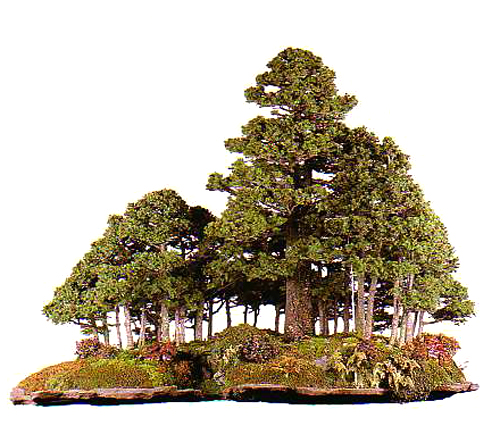
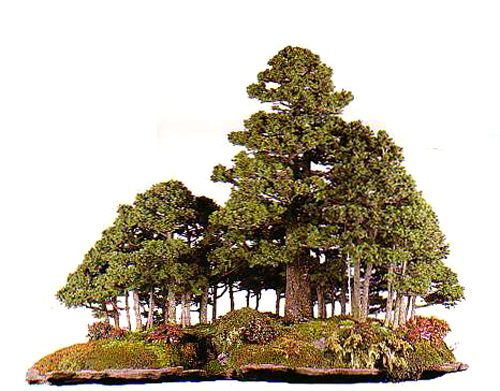
23-1Forest on a slab from Bonsai Today issue 23. Though the photo is uncaptioned it looks like it could be an Ezo spruce forest by Saburo Kato.
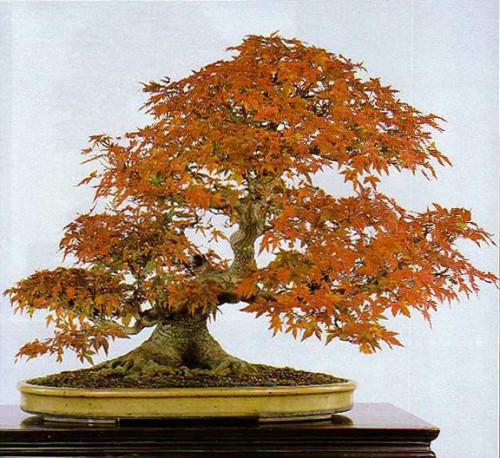
14-2

Slant style Japanese maple in fall color. From Bonsai Today issue 14. Artist unknown.
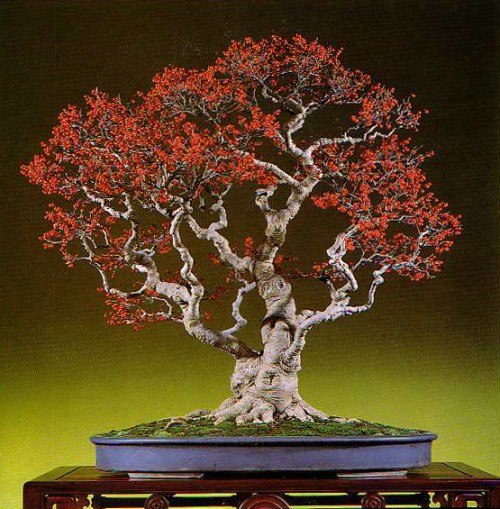


14-1

This is one of a handful of outstanding Japanese winterberries (Ilex serrata) that pop up here and there in Bonsai Today. It’s from issue 14 (it appears on both the cover and inside, though with different backgrounds). Artist unknown.
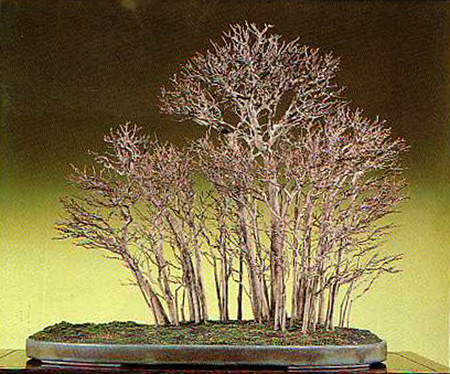
14-6

Trident maple forest from Bonsai Today issue 14. I counted 29 trees, though it’s difficult (if not impossible) to tell the exact number. The pot is almost exactly the same length as the planting’s height (23″).
23-2

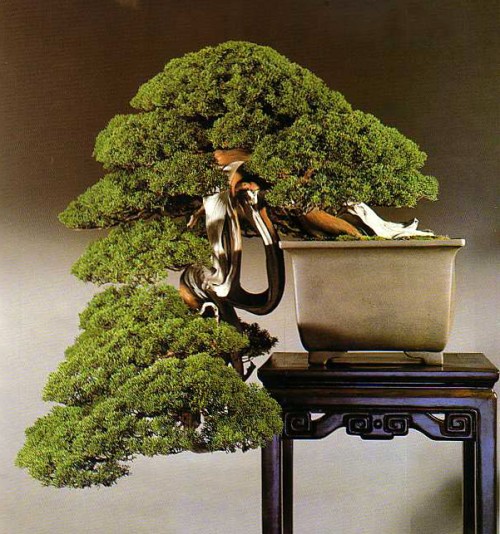
Full cascade Shimpaku juniper from Bonsai Today issue 23. Artist unknown, though it looks like it could be a Kimura. Height: 35″


Source: Bonsai Bark Read more!

Monday, June 14, 2010

Bonsai tree:Japanese Slab Forest & Other Issues

BT23
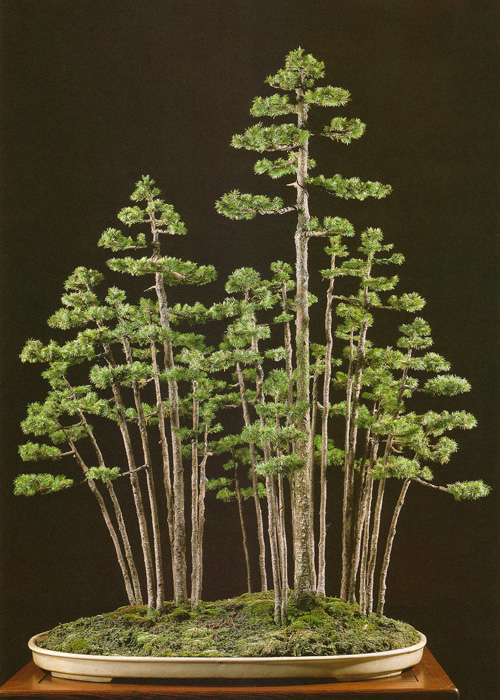
This illustrious bonsai forest is from Bonsai Today issue 23. Among other things, it shows how one very strong bonsai tree can add drama and power to a bonsai forest planting. Though the original doesn’t say, I’ll guess that it’s by Saburo Kato (Japan’s most revered bonsai artist) and that the trees are Ezo spruce.
Most of the content in Bonsai Today magazine is from the old Japanese masters, and even though there is much to be excited about in contemporary Western bonsai, you would be hard pressed to find a forest with this level of refined precision anywhere outside Japan. Even the ferns and other little plants that make up the forest floor seem to be in scale.

Source: Bonsai Bark Read more!
Friday, March 12, 2010

Bonsai tree: Seventh Entry Bonsai Art Contest

donnaentry

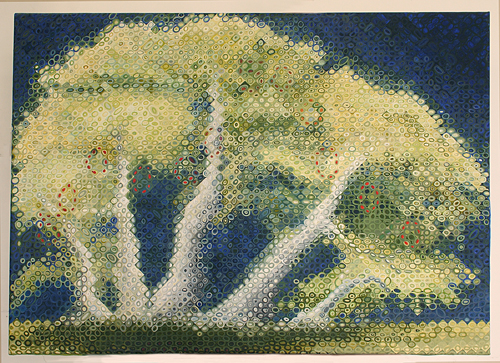
Cedar elm forest painting by Donna L. Dobberfuhl. “Here is my entry. It is a 40″ x 30″ painting I did of “The Texas State Bonsai Exhibit” Cedar Elm Forest. The bonsai is planted in a custom ordered Chinese pot of some 65″ long, The Forest is about 4′ tall. I used the style of painting introduced by Chuck Close. I am a sculptor by profession but exercise my mind with occasional painting projects.”

Source: Bonsai Bark Read more!
Friday, January 15, 2010

Saikei. Create a Planting with a Deep Ravine

inside

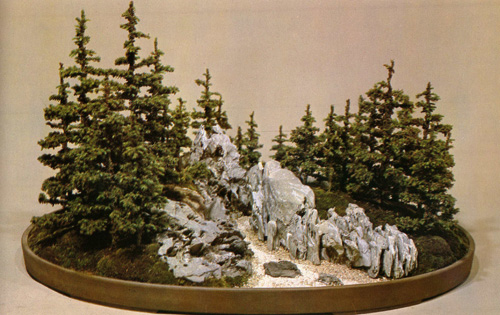
This planting from Toshio Kawamoto’s Saikei classic is quite similar to the planting on the cover: same trees, same pot and somewhat similar rocky ravine separating two tree and moss covered areas. The main difference is that this one shows a deep ravine. The rocks that define it represent tall vertical cliffs.

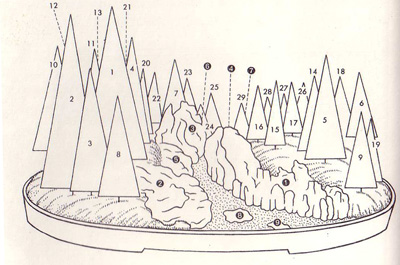
How to create a deep ravine saikei
The purpose of this section is to show how to create a deep ravine saikei. In fact, if you look at the drawings, it is almost as if the author is inviting you to duplicate his work.

front

birdseye Read more!

Friday, January 8, 2010

Melba Tucker’s Olive and Suiseki

tuckerolive

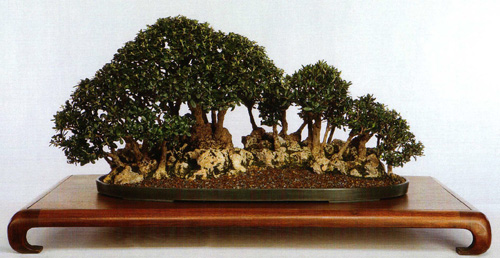
This dramatic European perfect olive forest on a rooted burl is by Melba Tucker. It is borowed from The National Bonsai Foundations 2008 calendar.

Though it goes without saying
This old gem looks like a forest growing on a rocky ledge somewhere in Spain and though it goes without saying, I will say it anyway: it is one of the most wonderful, natural looking forest plantings anywhere. If you are ever anywhere near Washington DC, check it out. It’s at the National Bonsai and Penjing Museum.

melbasui2

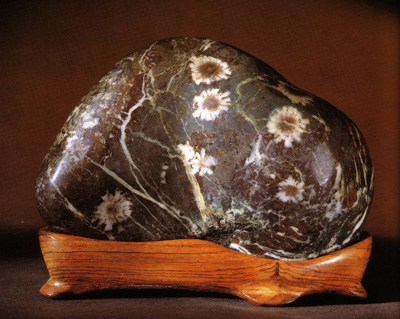
Melba found this distinctive American Pattern Stone in the Mojave Desert. The photos are by Peter Bloomer. Peter and his wife, Mary Holmes Bloomer are the editors.


suimelba

A Chrysanthemum stone from Japan. Read more!

Thursday, December 31, 2009

The Formal Bonsai Forest

formalforest1

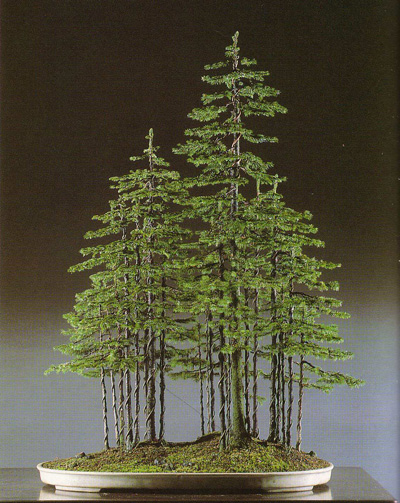
Finished for now. Three years after planting. Masahiko Kimura styled this Ezo spruce (Picea Glehnii) planting with a high mountain stand of conifers in mind. You may also notice how Kimura enhanced the feeling of age by removing or jining about half of the limbs. Trees tend to shed limbs as they age. This is especially true of trees in forests where growth folows light.


formalforest2

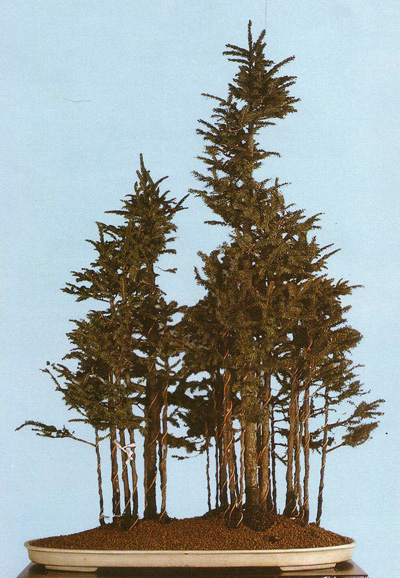
An intermediate stage. One year after planting and two years before the top photo. It’s quite powerful at this stage, wires and all. Notice how all the trees are almost perfectly straight and vertical. The look isn’t completelly natural yet but still prety impresive.

formalforest3

Freshly planted. Kimura started with inexpensive, untrained trees. The placement of each tree is carefully thought out to create a natural feel. We will discuss some of the concepts behind placement in future posts. Read more!