Showing posts with label japanese maple bonsai. Show all posts

Tuesday, December 27, 2011

Bonsai tree: Enjoying a bonsai show


Source: Bonsai Tonight
Enjoying a bonsai show

Walking through a bonsai show is a great way to pass an afternoon – or longer if the show is particularly large or excellent. But spending a whole day at a bonsai exhibit? Two days? Three? That’s a different story. I was surprised to find myself with a lot of free time at several great exhibits this fall. After wandering the aisles for several hours on consecutive days, I found there were many different ways to take in all that a show has to offer.

Kinzu

Citrus japonica ‘Hindsii’ – Kinzu, or wild kumquat

At first I spent a lot of time looking at my favorite trees, or trees that triggered enough dissonance to keep me engaged. I looked at the branches, the wiring, the style and the health of the tree. Sometimes I’d ponder the display or try to figure out what I’d do with such a tree were it my own.

Japanese flowering quince - 'Chojubai'

Japanese flowering quince – ‘Chojubai’

Needle juniper

Needle juniper

This approach only kept me occupied for so long. During my second full day at Gomangoku, I searched out all of the black pines and really focused on how they were styled. During my third full day at the exhibit, I studied the relationship between trees and pots, asking myself if I liked the color, shape, size and style of the containers in which the bonsai were growing. At one point I caught myself focusing on the accent plants and even on the mini-slabs on which the accents were displayed. In short, I found there was a lot to learn from quality exhibits.

White pine

White pine

The photos in this post come from this year’s Taikan-ten in Kyoto. I don’t know that I saw the program for the event, but I spent a lot of time studying the trees. I think the only reading I did about the exhibit focused on a remarkable pine from Daiju-en that “survived the atomic bomb blast at Hiroshima.”

Japanese black pine - survived Hiroshima

Japanese black pine


Card displayed with remarkable pine

Everything else I gleaned from the exhibit resulted from studying the trees on display and talking about the trees with Peter Tea and other visitors. I don’t recall what exactly struck me about these trees as I stood before them, but it likely resembled the questions and comments below.

Shimpaku

Shimpaku – what fun movement and dense foliage.

Trident maple

Trident maple – wow, the trunk fills the pot. Good fall color, and interesting glaze on the pot.

Princes persimmon

Princess persimmon with great fruit – I really want to develop more fruiting bonsai because they provide great color for exhibits.

Japanese black pine

Black pine – very unusual movement. What is the ideal pot for such a trunk?

Accent

Great fall color – interesting pot.

Satsuki

Old satsuki azalea

Persimmon

Elegant princess persimmon – nice open display

Satsuki

Giant trunk for a satsuki – is the pot a good fit?

White pine

White pine on a rock – these were always heavier than I expected

White pine

Unusual white pine planting – it might be fun to create more interesting “containers” for my trees.

Shimpaku

Shimpaku with small scroll

Japanese black pine

Formal upright black pine – wish I had a few.

White pine

White pine with striking first branch – how would I style such a tree?

Japanese maple

Japanese maple – great color, great trunk, great roots. Nice composition.

White pine

White pine with really long key branch

White pine

White pine clump on a slab. This is clearly the year for non-traditional white pine bonsai.

White pine

Great white pine – massive base, and the tree was only about a foot tall.

Japanese black pine

Black pine

Shimpaku

Shimpaku

Flowering apricot - ume

Japanese flowering apricot – ume

Shimpaku

Shimpaku with awesome movement. Wow. Really pretty tree. How fun to pick a pot to complement the trunk.

Rock planting

What’s the name of this tree again? I looked it up when I got home. It’s a Japanese pepper tree – Zanthoxylum piperitum, known as isozanshou in Japan. I’d like to find one to work on.

Korean hornbeam

Korean hornbeam

Japanese black pine

Japanese black pine – a comforting tree to admire. The base is large but not overpowering. The round apex and branch pads give the tree a soft feeling that complements the round bends in the trunk.

The pine above was one of many nice pines on display, and one of the many great bonsai in the hall. Enough so that I didn’t even try to take it all in at once. The sales area made for the best distraction – that and the snack bar. I’ll take a short break now and share more photos from the show later this week.
Read more!

Thursday, December 1, 2011

Bonsai tree: Show Time

This Japanese holly won a prize at the Taikan-ten. Photo is from Peter Tea’s blog.

What happens when two American bonsai apprentices help prepare for a major Japanese bonsai show?

A lot of work and energy go into a major bonsai show. What you see are the results; magnificent bonsai beautifully displayed. What you normally don’t see is everything else; the behind scenes efforts that make for a good show. Both Peter Tea (Journey of a Bonsai Apprentice at Aichi-en) and Jonas Dupuich (Bonsai Tonight) present a behind the scenes view of the Taikan-ten Bonsai Exhibition* in their latest posts. They also present some great shots of the trees.

* The tree’s Jonas presents have been prepared for four different shows, rather than just the Taiken-ten.

This powerful Black pine is a picture of perfection after a thorough prepping by Jonas. From Bonsai Tonight.

This Hemlock floors me. It’s the ancient bark and the unique top section of the trunk (among other things). From Peter Tea.

This rough bark Japanese maple is one of Peter’s favorite trees at the show.

Another Black pine that Jonas wired and cleaned up to show. In addition to the shear beauty of the tree itself, you might notice how well Jonas cleaned and oiled the pot. Now if everyone who photographs their bonsai would only do the same…


Peter doing some last minute pruning on a Trident maple.

Jonas giving us some scale for this large Japanese Black Pine. Photo by Peter.

The electric toothbrush technique. Photo by Jonas.

Source: Bonsai Bark Read more!

Tuesday, November 29, 2011

Bonsai tree: Read This If You Grow Japanese Maple

Now that I have your attention… This post is about a common bacterial disease called Pseudomonas syringae, which frequently affects Japanese maples yet is relatively easy to control. It is often misidentified as Verticillium wilt, as both cause tip dieback. The Pseudomonas bacteria form purply-black stem discolorations, which is the result of a toxin produced by the bacteria which kills cells. Twigs, branches and eventually the entire tree may die. Older and stronger growing trees are less susceptible, as are some varieties. Do not prune maples in the fall (especially in the Northwest) as this disease enters any wound and is encouraged by wet, cool winters. Any cut, at any time of year, should be sealed immediately with a liquid sealant.

Control is three-fold. The first is keeping your Japanese maples strong, healthy, and damage-free. The second and third are related: If you can keep your tree dry during wet and cold periods, that is half the battle. The other is chemical control, which is by copper sulfate or similar bactericide. ZeroTol (an oxygenator, essentially a very strong form of hydrogen peroxide) is excellent. Top spray and bottom drench is recommended.

If you have problems with this disease, try a chemical drench after repotting or after heavy root work. And if you live in an area with wet, cool weather in the fall through spring, seasonal prophylactic spraying is a sharp idea.

Clearing away leaves and especially seeds of maples—like bigleaf or vine maple—is essential after leaf fall as these commonly planted landscape trees are frequent carriers of the disease. Keep leaves and moss away from trunk bases, too.


The purply-black tissue damage of the Pseudomonas bacteria shown on this branch is typical of the disease.


Discolored stem damage above and below a pruning cut (seen as a white stub) where the bacteria likely entered the Japanese maple.
Read more!
Friday, November 18, 2011

Bonsai tree: Old News on the Pacific Rim


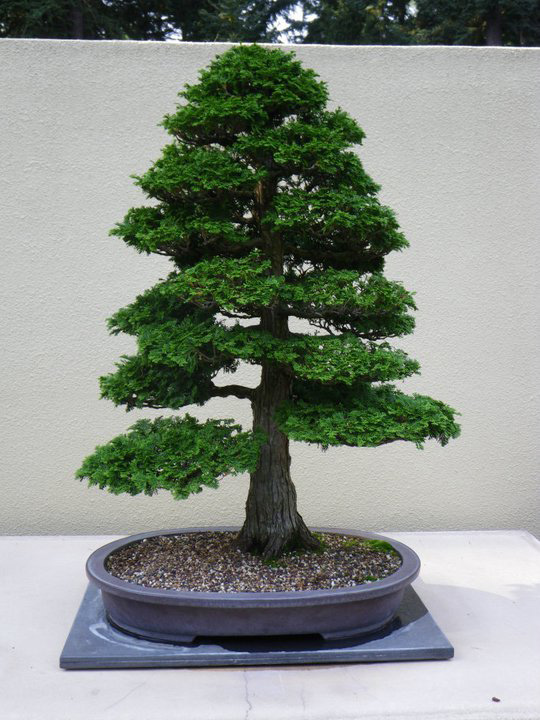
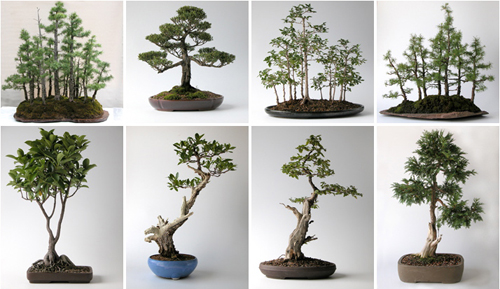
This stately Hinoki cypress (Chamaecyparis obtusa) is from Weyerhaeuser’s  Pacific Rim Bonsai collection. The photo is from a gallery of Pacific Rim bonsai from Kahlua Bonsai on facebook. I was going to use this photo to start a post on Formal upright bonsai when, in the course of a little research, I stumbled upon an important piece of old news about the Pacific Rim Collection.

Better late….
Way back in April 2009 we featured a post titled Pacific Rim; a Glimpse of What You Can’t See. The Pacific Rim refers to Weyerhaeuser’s rather famous bonsai collection in Washington (near Seattle). The ‘Glimpse of What You Can’t See’ referred to the fact that the collection was closed to the public at the time. Turns out, that the collection is once again open. Somehow this piece of good news slipped by our rather faulty radar, so I suspect we’re a little tardy on reporting this.

The details
The Pacific Rim bonsai Collection is open weekly Tuesdays through Sundays (closed Mondays) year-round. Our operating hours are 10:00 Am – 4:00 PM. Federal Way Washington, between Seattle and Tacoma.

Photo gallery
A small sampling of some of the collection follows. You might notice that some text is cut off. If you are interested, you can visit the Pacific Rim’s remarkably well-hidden photo gallery to see what you’re missing.

Perfection.

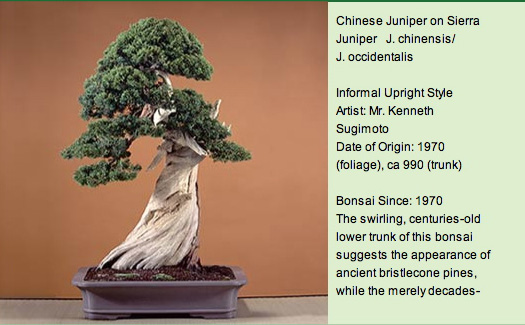
Encore. This powerful old Sierra/Shimpaku juniper showed up on Bark almost two years ago in a post titled ‘The Bonsai Artistry of Michael Hagedorn Plus Freeze Dried Roots.’

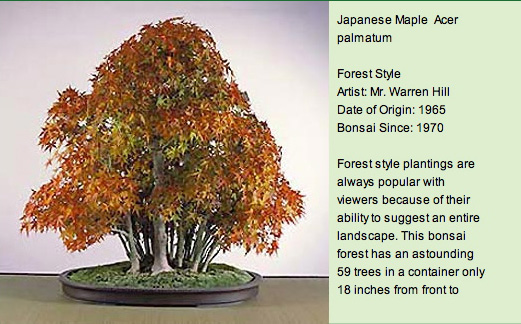
59 trees!

Source: Bonsai Bark Read more!
Saturday, November 5, 2011

Bonsai tree: Weekly Wire Six: A Little Tipsy

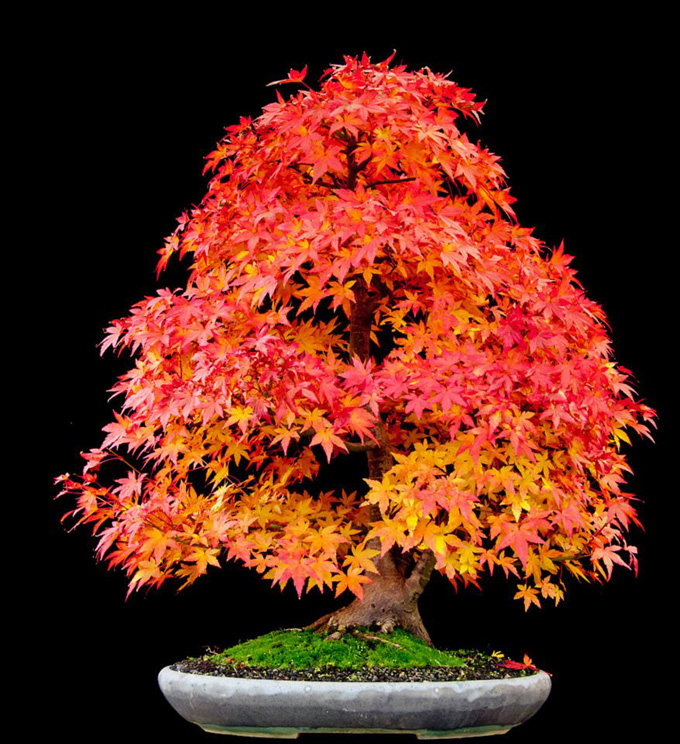
More fall color. There’s something about the fiery brilliance of fall color. Both the colors and the shape of this Japanese maple are reminiscent of the large Sugar maples that grow around here in Vermont. The photo is from Reiner Vollmari’s facebook page.


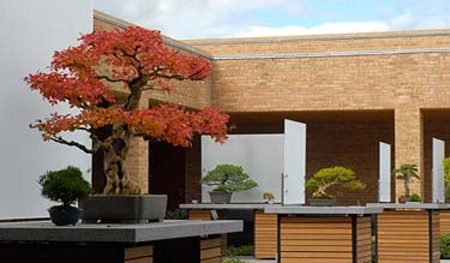
The Windy City. Next time you’re in Chicago you can visit the bonsai collection at the Chicago Botanic Garden. From what I can see from their website, it looks like a great display area with some quality trees. They claim to have “one of the best public collections of bonsai in the world” which may be a stretch, though I’ve never been there and the photos are smallish, so it’s hard to say anything definitive. It would help if there were more live links on the site and larger photos. As it is, the website serves more as a teaser than a tour.


Alive and well in Florida. One of the most active and rich bonsai schedules anywhere belongs to the Bonsai Societies of Florida. Here’s a little taste to whet your appetite.

Dan Robinson is in the midst of a Florida bonsai tour at this very moment. It’s not too late to catch him.

The tenth annual Joy of Bonsai, featuring Suthin Sukosolvisit and friends is happening Jan 13-15 in Bunnell.

The annual Ben Oki tour is also happening in January. 20 stops in 16 days!


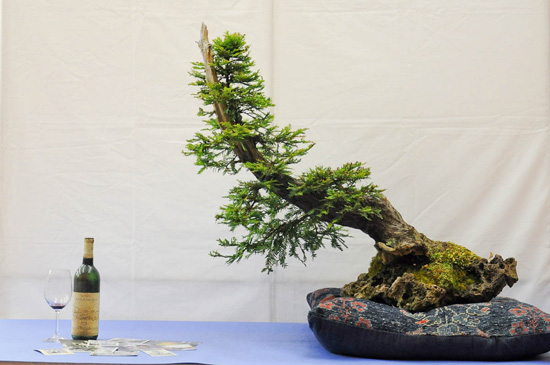
A little tipsy. You can’t help but notice how this rather comfortable Redwood is leaning towards the wine. Bonsai Tonight.


Polshich. If you can read this, you should definitely check it out. Even you can’t read it, why not?

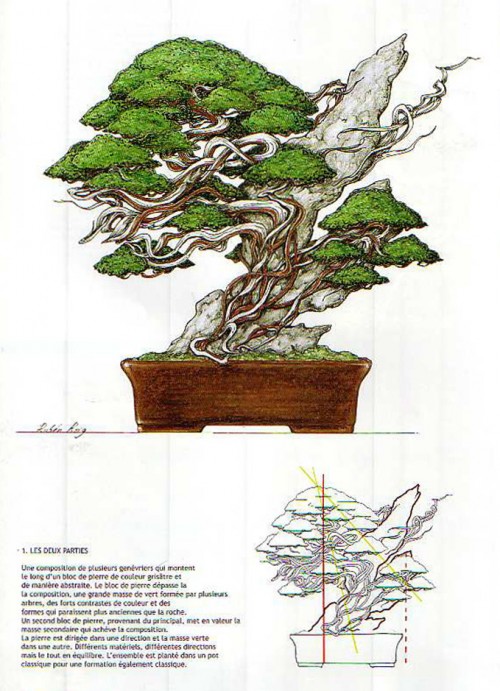
The artists. In our last Weekly Wire we said that Dave Piemme was the winner of our Bonsai Detective Art Contest. And it’s true, Dave is the winner (he’s already collected his $50 worth of gifts from Stone Lantern). What we didn’t say, was who all the artists are. So here’s your list: 1. Nacho Marin, 2. Ruben Roig (drawing above is his), 3. Deborah Koreshoff, 4. Rudi Julianto, 5. Patrick Giacobbe, 6. John Naka, 7. Fabrizio Petruzzello, 8. Susan Greenleaf, 9.Kevin Wilson, 10. Nacho Marin


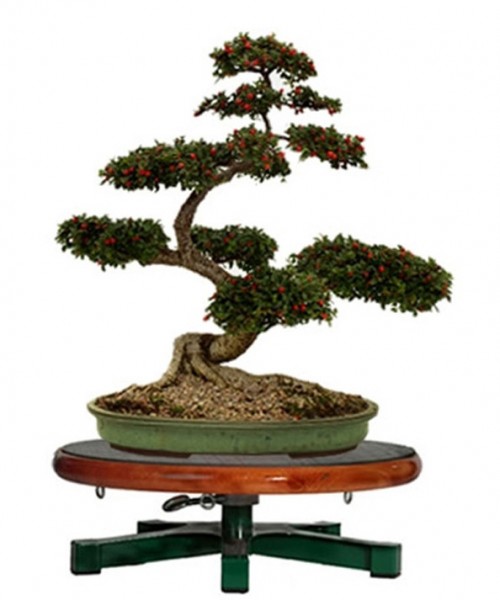
New turntable. Stone Lantern is featuring a new Table-top turntable. It’s rugged, strong, very beautiful, the surface area is larger than other bonsai turntables and it has a range of other features that just might make it the right one for your bonsai (and other) needs.

Bonsai in Pakistan. I just stumbled across the Pak Bonsai forum. I’m not sure if we have any followers in Pakistan (we have several in neighboring India), but either way, it caught my attention.

Better hurry up if you want to make it to the 11th annual Asia-Pacific Bonsai & Suiseki Convention & Exhibition.


Satsuki care. Into Satsukis? If so, check out the care calendar for Satsuki azalea bonsai at bonsai4me.

From Satsuki Azaleas by Robert Callaham.

A little respite from your typical massive trunk, full-crowned bonsai. I like the clean simple lines of the trunk and branching and the way they serve to display the flowers in an open, loose way (but not too loose). The photo is from Paulo Roberto Marasca’s facebook page. Here are some more of Paulo’s trees.

A Literati lesson. We’ve been talking Literati bonsai recently. Maybe it’s time for someone else to say a few words. How about our friend Robert Steven? His insights are excellent and so are his bonsai. The article is from ofBonsai Magazine.


Another Literati lesson. We’ve been talking Literati bonsai here recently. Maybe it’s time for someone else to say a few words. That someone else would be Randy Clark (& a couple friends) of the Bonsai Learning Center.


A few trees from the Bonsai Society of Winnipeg (that would be in Canada, our gentle neighbor to the north).

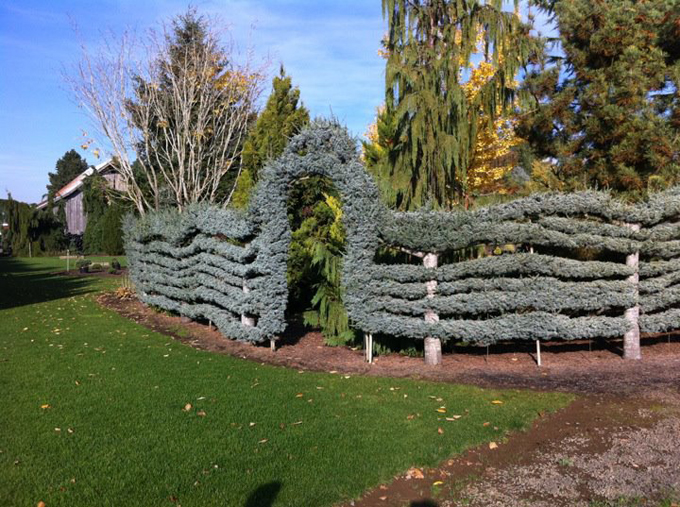
What a great fence. I know some purists don’t appreciate manipulating plants this way, but I love. it. It’s made of Atlas cedars, a luscious plant that you occasionally see as bonsai. Unfortunately, like so many plants, they won’t grow here in northern Vermont. It’s from Russell’s Nursery’s facebook page (here’s their website). They’re in Auroa Oregon. A great place to be if you like growing pretty much everything but tropicals.

Source: Bonsai Bark Read more!