Tuesday, November 22, 2011

Bonsai tree: A Very Close Second

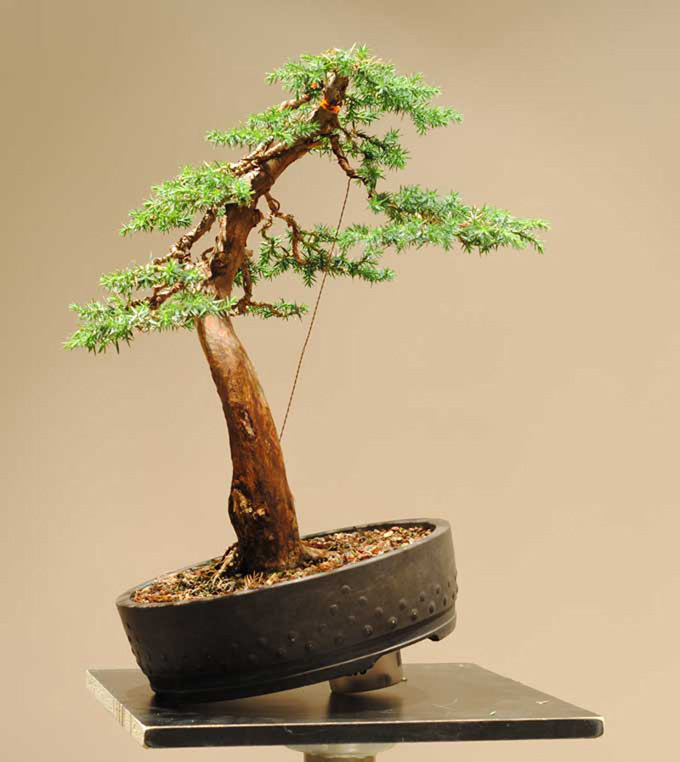
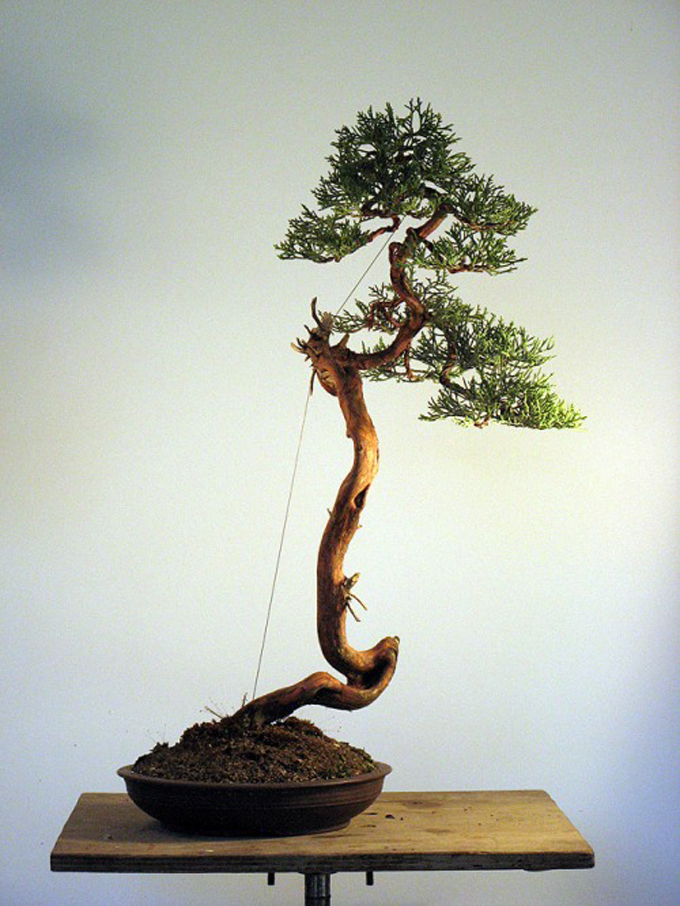
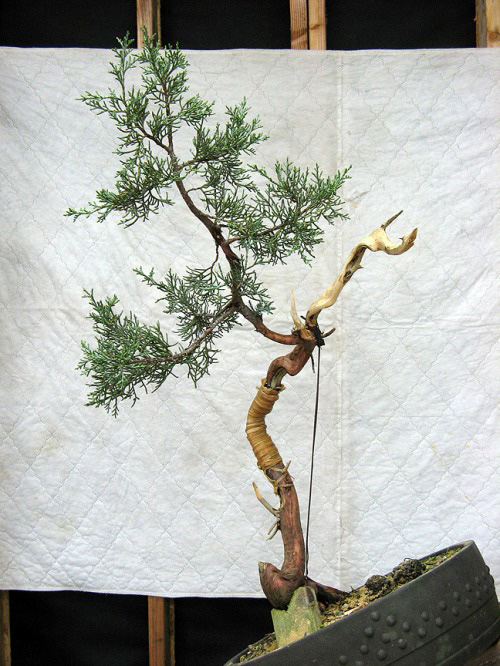
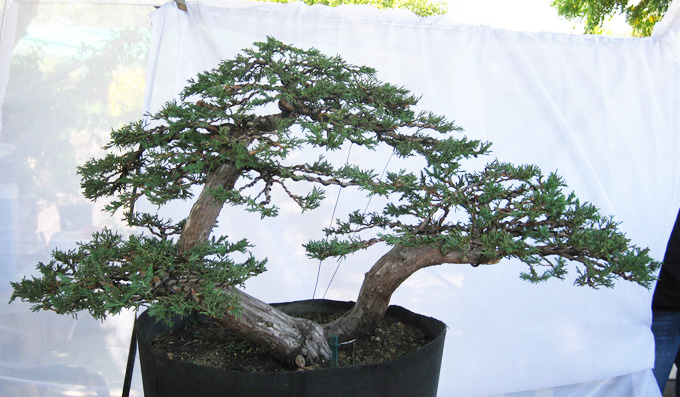
Tom Duong’s juniper (prostrata?) was a very close second in our Bonsai from Scratch contest.

Second place prize

Congratulations to Tom Duong, our Bonsai from Scratch contest second place winner. Tom’s juniper gave Aaron Klalid’s juniper a real run. Tom’s second place prize is a $250 gift certificate from Stone Lantern.

Judges comments

“Strong entrant. Using a branch to cover the abrupt bend on the main trunk is a good choice. Nicely wired crown.” “Great performance; some of the larger foliage masses lack clarity and definition, such as the large low branch to the left, and the smaller trunk is one single dome – try to make these areas modular.” “It is really well wired, looks like a long term project.” “Good choice of stock to start with and a well-thought out result.”

My comments

Several things stand out about Tom’s bonsai. First, his choice of stock was excellent. Good stock is half the battle. Second, Tom’s skill in shaping with wire is undeniable. I am particularly impressed with the crown, where this skill (and a high degree of patience with a somewhat tedious job) shines through. I also like the way the movement of the two trunks flows together (particularly the crowns). It’s unfortunate we can’t see the tree in a bonsai pot, though not potting it may have been the right choice (health-wise) on Tom’s part. We’ll just have to use our imaginations (mine shows an unglazed light-grey medium-depth oval). It’s also unfortunate that more care wasn’t put into the photos.

Stay posted for the rest of the prizes

Please accept my apologies. I know I promised we’d post the rest of the winners today, but in order to do them justice, we need just a little more time. Thanks for you patience and understanding.
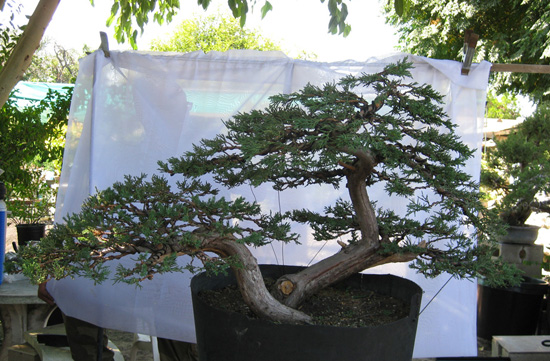
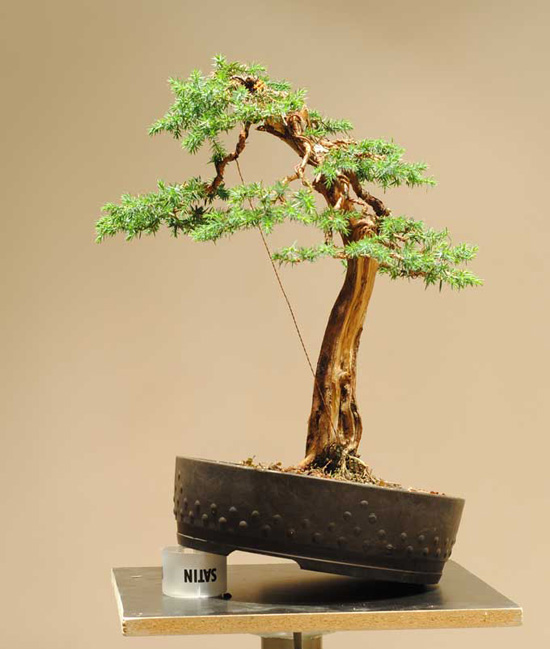
The back. Interesting how the flow of the tree seems to change some when viewed from this side (aside from the obvious point that it is a reverse view). It would have been a better shot with less background noise (clutter). I wonder if the quality of the photos was the difference between first and second place.
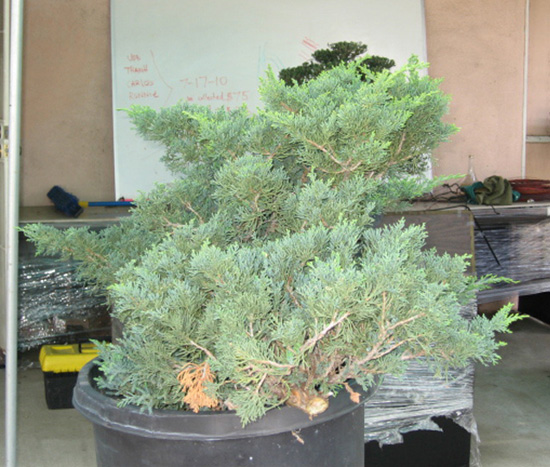


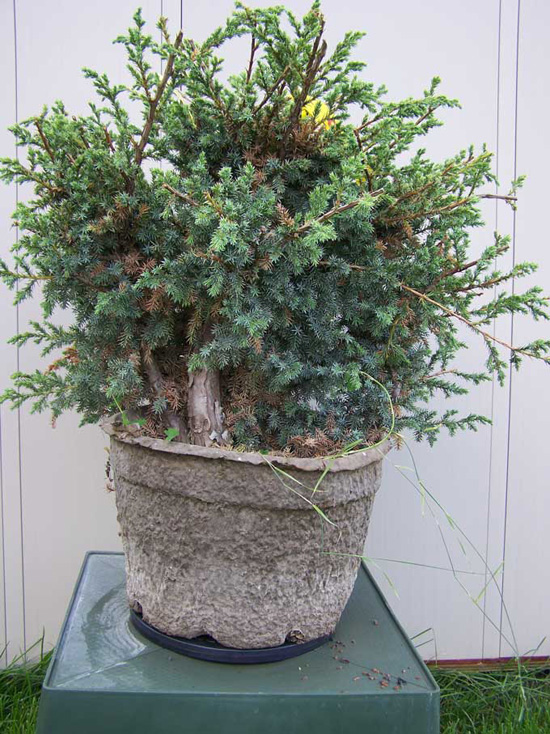
Before. There’s a bonsai in here somewhere.

Source: Bonsai Bark Read more!

Saturday, November 19, 2011

Bonsai tree: The Winner!

Aaron Khalid’s Squamata juniper finished first in our Bonsai from Scratch contest.


The prize

Congratulations to Aaron Khalid, our Bonsai from Scratch contest first place winner. Aaron’s prize for finishing first is a $400 gift certificate from Stone Lantern (we’ll devote our next post to the rest of the prize winners).

Judges comments

Here are a few comments on Aaron’s tree by our judges: “Suberb; well-balanced and clean design.”  “Great tree, though I like the back better than the front.” “Excellent Bunjin style bonsai, a dramatic improvement.” “Nice touch. The wiring on the branches is excellent.”

My comment

So many of the trees were worthy, but what helped push Aaron’s over the top was the dramatic difference between what he started with and what he ended with. This and the fact that what he finished with is such a quality bonsai. Simple, clean, well-balanced, easy on the eyes. I think any of us would be proud to have it in our collections. Another point, that is easy to overlook, but can make a big difference, is the quality of  the photos that Aaron submitted. Just the right touch for a first rate job all around.

Stay posted for the rest of the prizes

I’ve decided to let the spotlight shine on Aaron and his tree for the moment. We’ll post the second place tree and the rest of the winners in the next day or so.

The other side. It’s not difficult to see why one of the judges liked this view.

Before. An unruly mess with a promising trunk peeking through.

Source: Bonsai Bark Read more!
Friday, November 18, 2011

Bonsai tree: Old News on the Pacific Rim


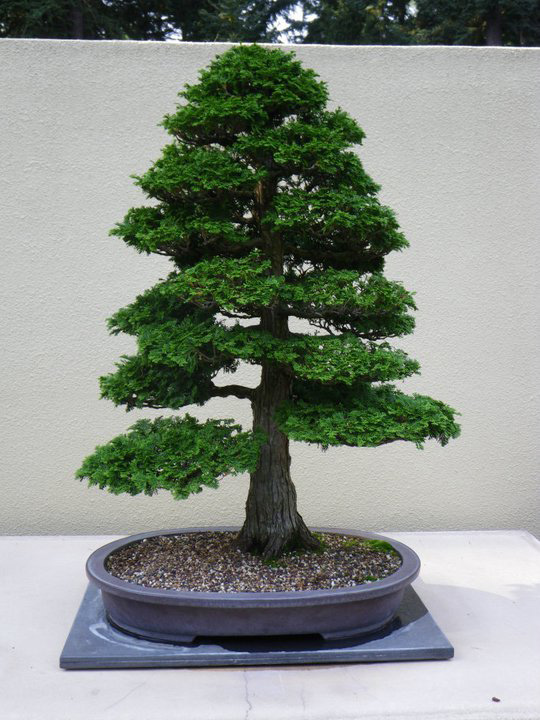
This stately Hinoki cypress (Chamaecyparis obtusa) is from Weyerhaeuser’s  Pacific Rim Bonsai collection. The photo is from a gallery of Pacific Rim bonsai from Kahlua Bonsai on facebook. I was going to use this photo to start a post on Formal upright bonsai when, in the course of a little research, I stumbled upon an important piece of old news about the Pacific Rim Collection.

Better late….
Way back in April 2009 we featured a post titled Pacific Rim; a Glimpse of What You Can’t See. The Pacific Rim refers to Weyerhaeuser’s rather famous bonsai collection in Washington (near Seattle). The ‘Glimpse of What You Can’t See’ referred to the fact that the collection was closed to the public at the time. Turns out, that the collection is once again open. Somehow this piece of good news slipped by our rather faulty radar, so I suspect we’re a little tardy on reporting this.

The details
The Pacific Rim bonsai Collection is open weekly Tuesdays through Sundays (closed Mondays) year-round. Our operating hours are 10:00 Am – 4:00 PM. Federal Way Washington, between Seattle and Tacoma.

Photo gallery
A small sampling of some of the collection follows. You might notice that some text is cut off. If you are interested, you can visit the Pacific Rim’s remarkably well-hidden photo gallery to see what you’re missing.

Perfection.

Encore. This powerful old Sierra/Shimpaku juniper showed up on Bark almost two years ago in a post titled ‘The Bonsai Artistry of Michael Hagedorn Plus Freeze Dried Roots.’

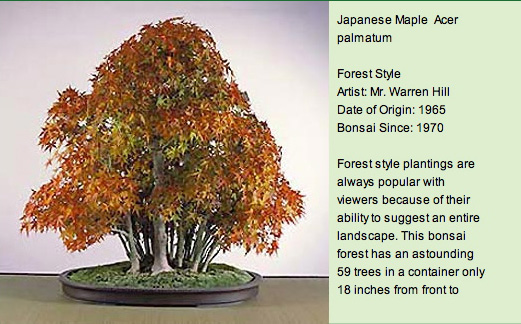
59 trees!

Source: Bonsai Bark Read more!

Bonsai tree: Youkakai – 8 Auction


Source: Bonsai Tonight
Youkakai – 8 Auction

The barker calls bids before a small crowd on a patch of dirt on a bright day in Inazawa, Aichi-ken. Lots speed by at a rate of two per minute. The trees are going fast.

Youkakai

Youkakai

Youkakai, or 8th day auction, is a local event held on the 8th day of each month at Kouyo-en. The proprieter, Mr. Takeshita, barks while runners scurry to keep up with the action. It’s quite an affair.

Although it is open to both professionals and non-professionals, the event is characterized by its regulars, bonsai nurserymen who frequently buy and sell at auctions across Japan. More formal events are only open to bonsai professionals. One such auction, Suiyoukai, or “Wednesday auction,” is managed by Japan’s association of bonsai professionals, the Nippon Bonsai Kyodokumiai, and held at the Green Club in Ueno each month.

Bidders

Bidders

The event couldn’t run any smoother. A makeshift roller plate between two roller tracks allows lots to move quickly. The auctioneers, Mr. Takeshita and a colleague, are familiar with tree values and call bids at predictable increments. There are no reserve values, but sellers are free to bid on their own lots to ensure trees sell for acceptable prices. When they don’t sell, sellers pay a commission based on the number where bidding stopped.

Trees for sale

Lots for sale

Trees for sale

Trees and pots on the block

As this is a local auction, prices can range from a few dollars to a few hundred dollars, but there are exceptions. The stewartia below, for example, didn’t meet it’s owner’s minimum, and the auctioneer new better than to let the tree sell for the price at which the bidding stopped (I don’t recall the number).

Stewartia

Stewartia

Runners place lots at one end of the roller track and roll them toward the auctioneer. The auctioneer accepts bids and announces winning bids. A recorder tracks sales, and a second recorder creates tags for each lot indicating seller and buyer. Runners then group trees by buyer and catch a breath before grabbing the next tree.

Trees coming down the line

Mr. Takeshita’s colleague accepting bids

Roller plate

The roller pad lets the auctioneer pivot trees with ease

Sold tree

Buyer number 1, seller number 120

Sold areas

Buyer number 4′s first purchase

Inexpensive items were often grouped together while more expensive trees were sold one at a time. Watching the trees breeze by made for a pleasant afternoon.

Black pines

Pines for sale

The event was work, however, for the runners. I attended the auction with runner Peter Tea, apprentice to Junichiro Tanaka of Aichi-en in Nagoya and runner extraordinaire. Although the trident maple below wasn’t up for auction, a number of lots were of comparable size.

Peter and a large trident maple

Peter Tea enjoying a large trident maple bonsai at Kouyo-en

I had the opportunity to attend the event with Peter and Mr. Tanaka as part of Aichi-en’s Bonsai Apprenticeship program, about which I’ll have plenty to say in coming weeks.
Read more!

Wednesday, November 16, 2011

Bonsai tree: Cicada Damage On Bonsai

This may well qualify as the most useless post I offer this year… because it will have relevance only every decade or so. Seventeen years, in some cases… I’m talking about cicadas. Recently I was in the Midwest and saw this cicada damage on a client’s beech. The cicada will lay eggs in the branches of a tree, leaving a strange stitching pattern. The larvae end up in the soil, where they will eat the tree roots. You may kill them with an insecticide drench. Mark your calendars for the cicada boom year in your area, and keep an eye out for this damage:


The healing callus makes stitch pattern. This is a beech.


Another branch with cicada damage from the summer, photographed in the fall
Read more!

Bonsai tree: A Bunjin Story

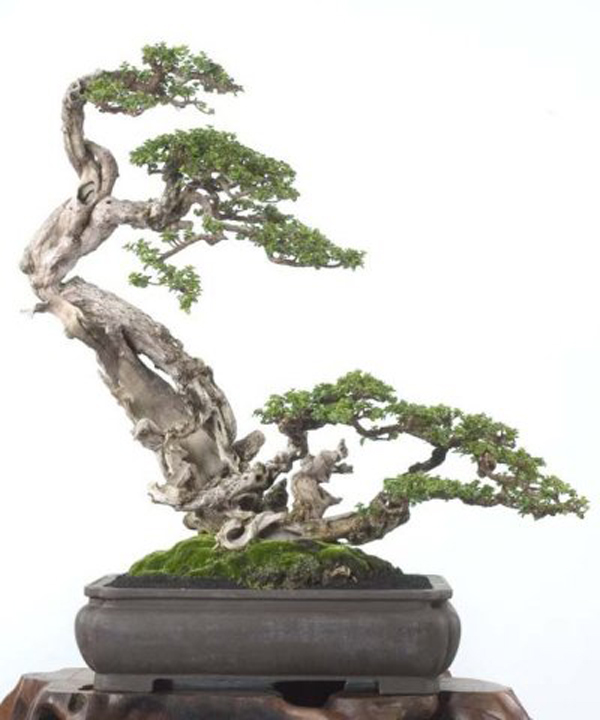
I borrowed this unusual Bunjin style Sierra juniper from Michael Hagedorn’s Crataegus Bonsai. The article is titled Developing an Unpromising Sierra Juniper Bunjin – student work from Seasonal.

There’s something about threes

It often works to divide things into thirds to better understand them and for discussion sake. In this tree’s case, you might be struck by the fact that it has three distinct sections:

1. The base. The lowest part starts with a radical slant then takes an abrupt twist. This sudden change of direction is both fluid and abrupt and tells much of the tree’s story. It’s a story that lends drama and mystery that just might peak our interest.

When you’re lucky, you find material to work with that has something this unusual (unusual and often dramatic features are most commonly found in collected trees where nature has had a chance to wreck its havoc). Conversely, features like this that are so eccentric often tend to set up tension that is difficult to reconcile with the rest of the tree. I think the ability to work with these difficult features is one thing that distinguishes bonsai artists from the rest of us hackers.

2. Mid section. The long vertical mid section almost ruined this tree. Originally it was ‘straight as an arrow’ (Michael’s words) but the students were able to put just enough movement in it to save the tree from a life of mediocrity. That’s a good thing; it’s a tree worth saving.

3. The top. Though a bit ‘loose and rangy’ (Michael’s words again), the top section has two excellent features. First, another abrupt turn that lends character and interest (another story perhaps) and then a stretch of classical bunjin elegance, with fluid movement and the typical falling branch. This section works so well in expressing bunjin, that if you cut the trunk off just a little above the abrupt turn at the base, you’d still have a very sweet tree. A little more conventional perhaps, but still….

All together now

The big question is: do these three parts come together in a way that makes sense? When you look at each section by itself, you have to wonder. But when you step back and view the whole tree, Viola!

A very pertinent observation by Michael

“Tricky to get the lighting right in a photo that will express the back and forth movement of the simple trunk. I’ve never been satisfied with images of bunjin, which require the viewer’s presence for a sense of scale, subtleties of movement, and evocativeness.”


Agreed

It’s difficult to capture the third dimension in a two dimensional medium. Many bonsai you see in photos would simply blow you away if you saw them in all their ‘real space’ glory. You could even say that what is lost in most photos, is every bit as much as what is captured.

At an earlier point. Just after the bend in the mid section is made. This view shows a lot more mid-trunk movement than the view above. In fact, it shows the tree in a whole different light. Another possible front?

Post-Dated – The Schooling of an Irreverent Bonsai Monk by Michael Hagedorn is a great bonsai read. Unique, funny, informative, and very well written. It’s on sale at Stone Lantern.

Source: Bonsai Bark Read more!

Saturday, November 5, 2011

Bonsai tree: Weekly Wire Six: A Little Tipsy

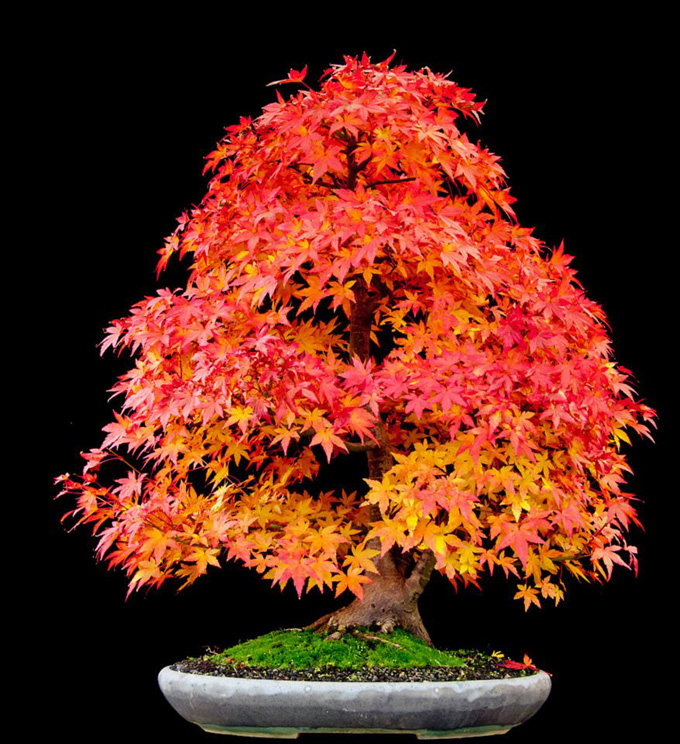
More fall color. There’s something about the fiery brilliance of fall color. Both the colors and the shape of this Japanese maple are reminiscent of the large Sugar maples that grow around here in Vermont. The photo is from Reiner Vollmari’s facebook page.


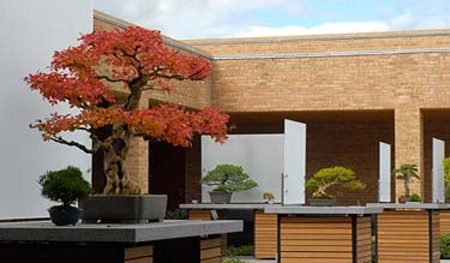
The Windy City. Next time you’re in Chicago you can visit the bonsai collection at the Chicago Botanic Garden. From what I can see from their website, it looks like a great display area with some quality trees. They claim to have “one of the best public collections of bonsai in the world” which may be a stretch, though I’ve never been there and the photos are smallish, so it’s hard to say anything definitive. It would help if there were more live links on the site and larger photos. As it is, the website serves more as a teaser than a tour.


Alive and well in Florida. One of the most active and rich bonsai schedules anywhere belongs to the Bonsai Societies of Florida. Here’s a little taste to whet your appetite.

Dan Robinson is in the midst of a Florida bonsai tour at this very moment. It’s not too late to catch him.

The tenth annual Joy of Bonsai, featuring Suthin Sukosolvisit and friends is happening Jan 13-15 in Bunnell.

The annual Ben Oki tour is also happening in January. 20 stops in 16 days!


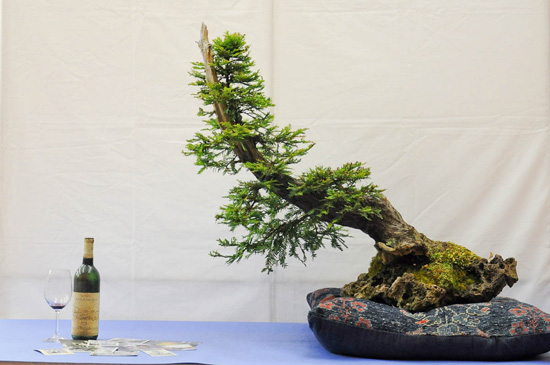
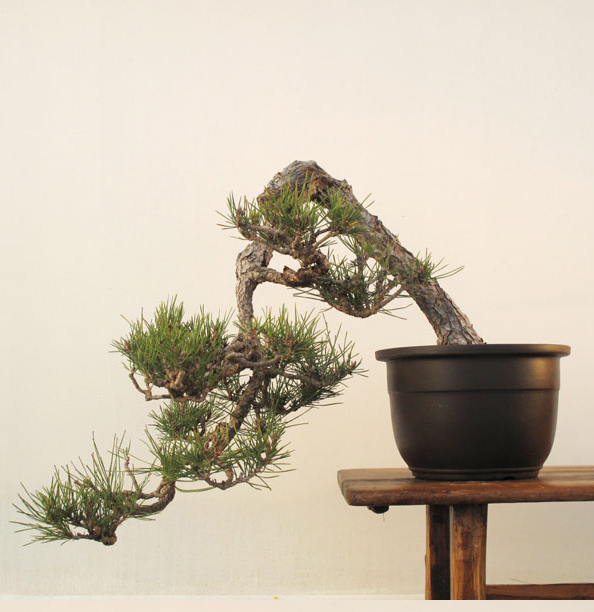
A little tipsy. You can’t help but notice how this rather comfortable Redwood is leaning towards the wine. Bonsai Tonight.


Polshich. If you can read this, you should definitely check it out. Even you can’t read it, why not?

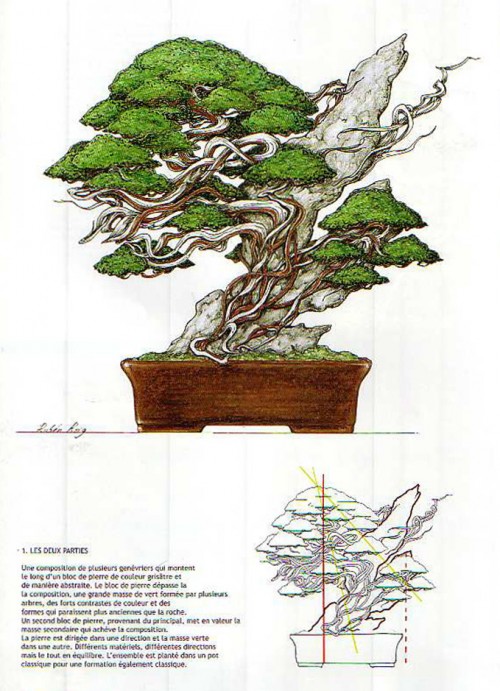
The artists. In our last Weekly Wire we said that Dave Piemme was the winner of our Bonsai Detective Art Contest. And it’s true, Dave is the winner (he’s already collected his $50 worth of gifts from Stone Lantern). What we didn’t say, was who all the artists are. So here’s your list: 1. Nacho Marin, 2. Ruben Roig (drawing above is his), 3. Deborah Koreshoff, 4. Rudi Julianto, 5. Patrick Giacobbe, 6. John Naka, 7. Fabrizio Petruzzello, 8. Susan Greenleaf, 9.Kevin Wilson, 10. Nacho Marin


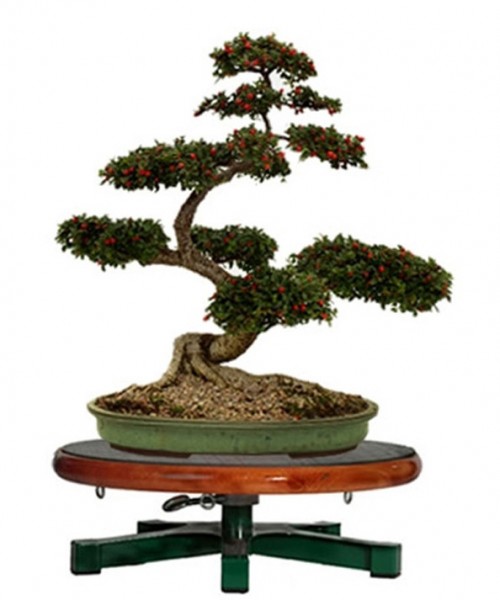
New turntable. Stone Lantern is featuring a new Table-top turntable. It’s rugged, strong, very beautiful, the surface area is larger than other bonsai turntables and it has a range of other features that just might make it the right one for your bonsai (and other) needs.

Bonsai in Pakistan. I just stumbled across the Pak Bonsai forum. I’m not sure if we have any followers in Pakistan (we have several in neighboring India), but either way, it caught my attention.

Better hurry up if you want to make it to the 11th annual Asia-Pacific Bonsai & Suiseki Convention & Exhibition.


Satsuki care. Into Satsukis? If so, check out the care calendar for Satsuki azalea bonsai at bonsai4me.

From Satsuki Azaleas by Robert Callaham.

A little respite from your typical massive trunk, full-crowned bonsai. I like the clean simple lines of the trunk and branching and the way they serve to display the flowers in an open, loose way (but not too loose). The photo is from Paulo Roberto Marasca’s facebook page. Here are some more of Paulo’s trees.

A Literati lesson. We’ve been talking Literati bonsai recently. Maybe it’s time for someone else to say a few words. How about our friend Robert Steven? His insights are excellent and so are his bonsai. The article is from ofBonsai Magazine.


Another Literati lesson. We’ve been talking Literati bonsai here recently. Maybe it’s time for someone else to say a few words. That someone else would be Randy Clark (& a couple friends) of the Bonsai Learning Center.


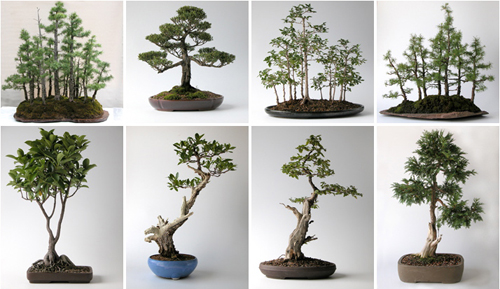
A few trees from the Bonsai Society of Winnipeg (that would be in Canada, our gentle neighbor to the north).

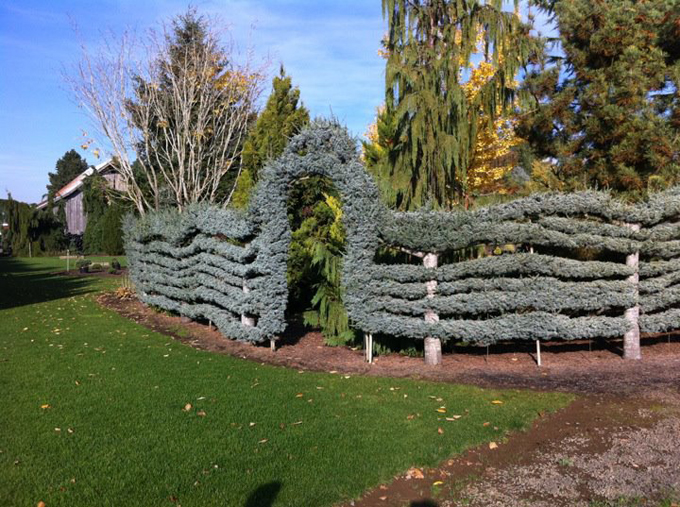
What a great fence. I know some purists don’t appreciate manipulating plants this way, but I love. it. It’s made of Atlas cedars, a luscious plant that you occasionally see as bonsai. Unfortunately, like so many plants, they won’t grow here in northern Vermont. It’s from Russell’s Nursery’s facebook page (here’s their website). They’re in Auroa Oregon. A great place to be if you like growing pretty much everything but tropicals.

Source: Bonsai Bark Read more!

Friday, November 4, 2011

Bonsai tree: When not to work on a white pine


Source: Bonsai Tonight
When not to work on a white pine

I brought the white pine below to an Akio Kondo workshop this past August. The tree looked much like it does now but the old needles had yet to turn brown. New growth had appeared much like it had the year before, and I had prepared to spend an afternoon wiring the tree. Kondo took one look and said nope, the tree’s too weak. He suggested I water the tree lightly, every other day at most, and wait until the following year to cut or wire the tree. Kondo wanted to see vigorous new shoots before stressing the tree with cutback and wiring, and the new growth wasn’t exactly vigorous.

What to do? Not much. Now that some of the old needles have turned brown, I removed them by running my fingers through the foliage and put the tree back on the bench until next year.

White pine with old needles

White pine – October 2011

Branch with old needles

Shoot with old needles

Old needles removed

Old needles gently removed

I took care not to remove all of the old needles, just the ones that fell away as I combed the foliage with my fingers. Typically fall is a good time to remove last year’s needles on strong white pines, but it’s best to leave weak trees alone until they get stronger. The photo below shows both first and second year needles, separated by a small gap along the branch.

Recent and second year needles

Same shoot from below – first and second year needles remain

Old needles removed

Loose needles removed

I expect that more second year needles will turn brown and fall away as the weather cools, and I’ll likely remove these around the end of the year.
Read more!
Thursday, November 3, 2011

Bonsai tree: Your Fate is in Their Hands

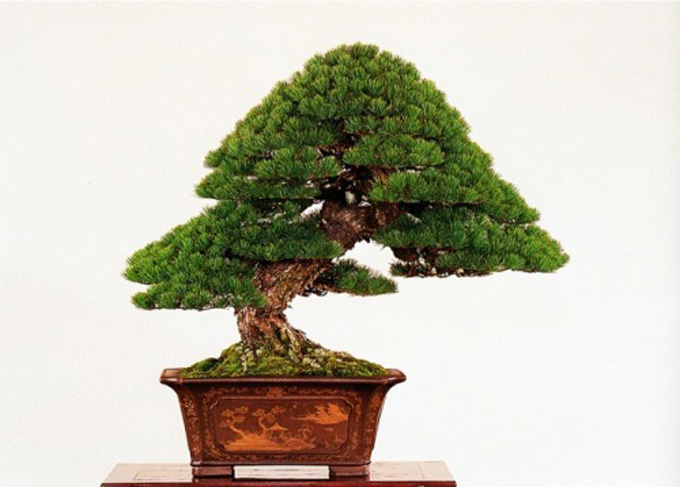
Michael Hagedorn (our alphabetically first judge) worked on this Japanese white pine before his teacher, Shinji Suzuki entered it in the famous Kokufu show. You can visit Michael’s Crataegus Bonsai (one of my all time favorite bonsai blogs) for the whole story. Michael is the author of Post-Dated – The Schooling of an Irreverent Bonsai Monk.

Bonsai from Scratch Contest: it’s time to meet the judges

All the images have been sorted and sized and sent to the judges. Now it’s their turn, so I thought it might be a good idea to introduce them. In alphabetical order, they are: Michael Hagedorn, Colin Lewis, Teddi (Theodora) Scobi, Robert Steven and Bill Valavanis. I would like to extend a hearty thanks (in advance) to each of them for taking the time to help us along with this contest. I look forward to the results of their efforts.

This very muscular Elm is from a gallery of Colin Lewis’ trees. Colin is a well known bonsai artist, teacher and author (and, I suspect, a genuinely literate gentleman – though that might just be his English accent), and is our second (in the alphabetical sense) judge. Colin’s home and bonsai studio is located in the snowy wilds of Maine. Way back in 2010, we featured an interview with Colin.


This cascading Japanese black pine is from Teddi Scobi’s (and Hitoshi Kanaegae’s) New England Bonsai Gardens. Teddi is the warm heart of NEBG, and, on a personal note, a long time dear friend.

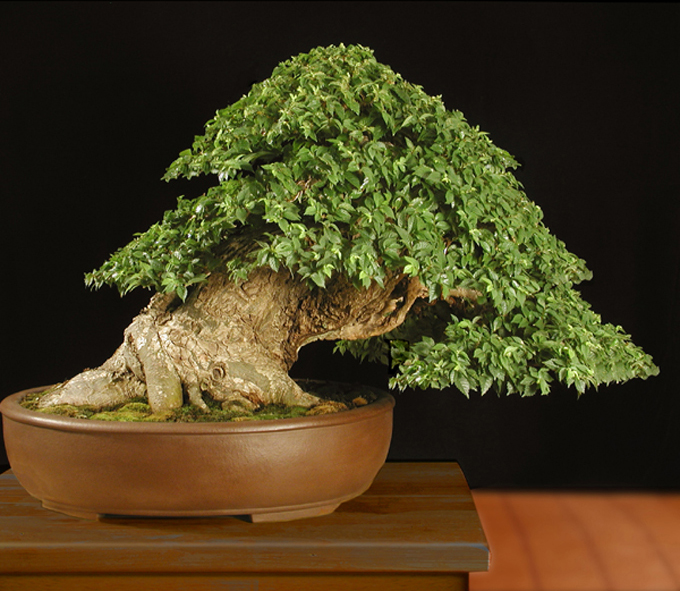
This now famous Premna, is one of dozens of my favorite Robert Steven trees. Robert is one of the most prolific and daring bonsai artists, teachers and authors in the world, and is always a great pleasure to work with. Robert’s critiques frequently appear here on Bonsai Bark.

Bill Valavanis must occasionally grow tired of being last or near last in the alphabet (but in no way last in the art of bonsai). But not to worry, we feature Bill, his excellent bonsai and his world class bonsai events (the 2012 US National Bonsai Exhibition is coming up) here on Bonsai Bark regularly. This Seigen Japanese maple is one of Bill’s most famous and most wonderful trees.

Source: Bonsai Bark Read more!